


Your Guide to Chemical Peel Recovery Time
- Charis Aesthetics
- Jul 23, 2025
- 14 min read

How long does it take to recover from a chemical peel? The honest answer is that it really depends. The typical chemical peel recovery time can range from just a few days to several weeks, and it’s all tied to the intensity of your treatment. Think of it like a workout for your skin—a gentle session needs less downtime than an intense one. A light peel might have you back to your routine in a week, while a deep peel is a much bigger commitment, requiring a longer healing journey.
Your Chemical Peel Recovery Timeline Explained
So, what does the recovery really look like day-to-day? It’s the question on everyone’s mind. The single biggest factor shaping your healing process is the depth of the peel you’ve had.
A light, or “lunchtime,” peel often leaves you with what feels like a mild sunburn, with some redness and flaking that clears up pretty quickly. On the other hand, a deep peel is a major treatment. It demands dedicated aftercare and a much longer period of healing to reveal its incredible results. Getting your head around this from the start is key to setting realistic expectations for your skin journey.
To give you a clearer picture, here’s a quick overview of what to expect.
Chemical Peel Recovery At a Glance
This table breaks down the typical recovery timelines, what you'll likely see, and how much "social downtime" you might need for each type of peel available here in the UK.
Peel Type | Typical Recovery Time | Common Side Effects | Social Downtime |
|---|---|---|---|
Light Peel | 1-7 days | Mild redness, slight flaking, dryness | 0-2 days |
Medium Peel | 7-14 days | Noticeable redness, swelling, peeling, tightness | 5-7 days |
Deep Peel | 2-6+ weeks | Significant swelling, redness, peeling, crusting | 14+ days |
As you can see, the deeper you go, the more downtime you’ll need to factor in. It’s a good reminder that while the results can be fantastic, proper healing takes time and patience.
Understanding the Different Timelines
Here in the UK, the healing process varies quite a bit depending on whether your peel is light, medium, or deep. A light chemical peel usually involves a recovery of about 1 to 7 days, with some mild redness and swelling that fades fast. A medium peel needs a bit more patience, taking roughly 7 to 14 days for the initial healing phase where your skin will be red, tight, and quite flaky.
Deep chemical peels are in a league of their own. They have the most intensive recovery, stretching from 2 to 6 weeks or even longer, with much more pronounced side effects.
This image breaks down the typical recovery for each peel type visually.
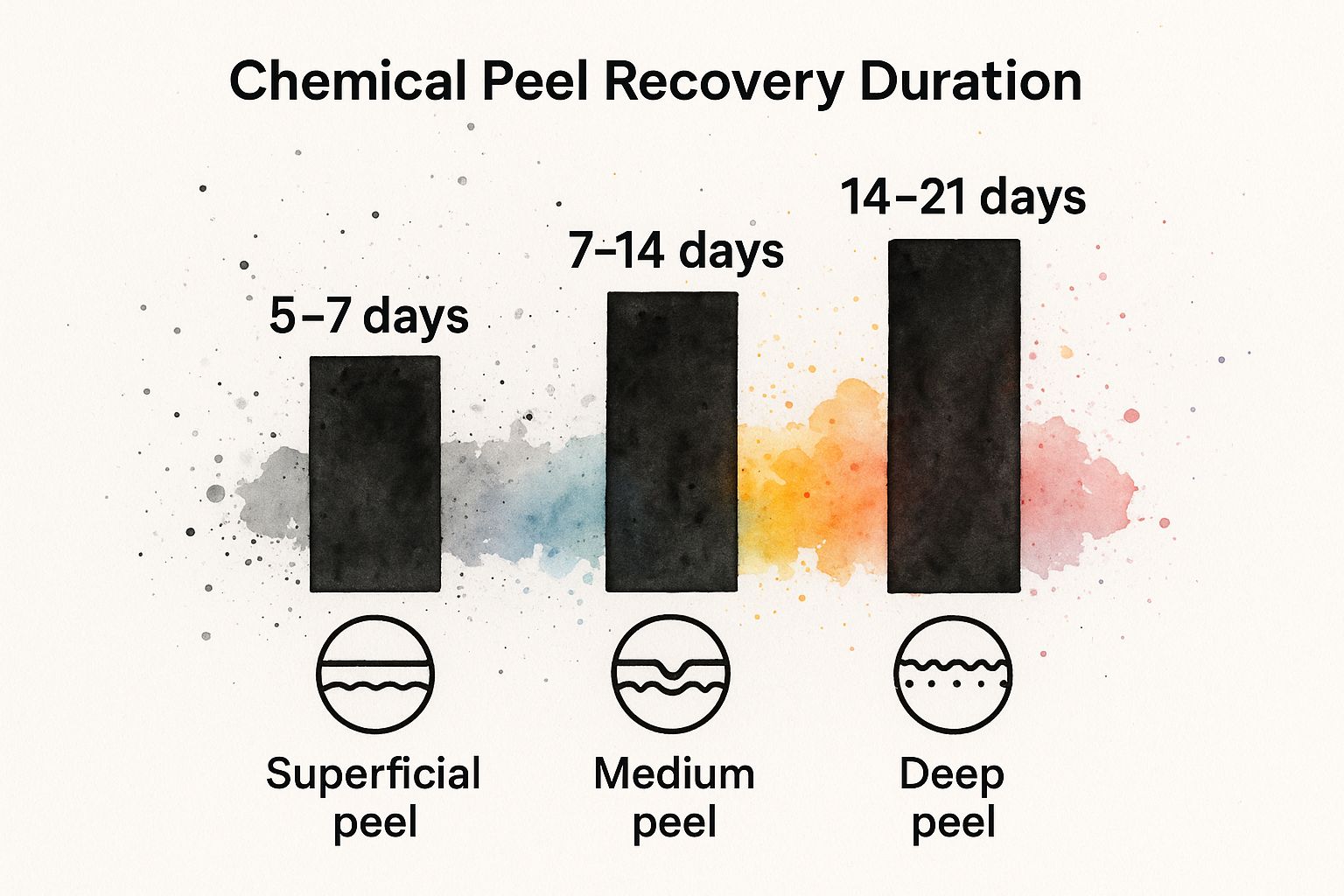
As the graphic shows, the deeper the peel, the more dedicated healing time you’ll need to schedule. It’s absolutely vital to plan for this downtime, especially if you’re considering a medium or deep peel.
The whole point of a chemical peel is to kickstart your skin's natural regeneration. The recovery period is where the magic really happens, as old, damaged skin makes way for the fresh, new layer underneath.
Seeing is believing, and looking at real-life examples can be incredibly helpful for managing expectations. You can see some amazing journeys in our guide to **chemical peel before and after results**, which offers a realistic look at the process. It helps you visualise everything, from those first few days of peeling to the final, glowing outcome.
The Light and Medium Peel Healing Process Day by Day

Knowing what to expect after a light or medium chemical peel can make all the difference. It takes the guesswork and anxiety out of the equation, letting you focus on what really matters: looking after your fresh, renewing skin. This roadmap will walk you through the entire journey, from that initial post-clinic tightness to the beautiful final reveal.
Your recovery starts the second you walk out of the clinic. The first thing you'll likely notice is a sensation a lot like a moderate sunburn. Your skin might feel tight, look a bit red, and be sensitive to the touch. This is all perfectly normal—it’s just the first sign that the chemical solution is doing its job and kicking off that all-important cell turnover.
Days 1 to 3: The Sunburn Phase
For the first few days, redness and that tight feeling are the stars of the show. Your skin is in a state of controlled inflammation, which is the very first step towards regeneration. You might also see a little swelling, especially when you wake up in the morning, and the beginnings of a dry, flaky texture.
During this stage, your one and only job is to be incredibly gentle. Cleanse your face with a mild, soap-free wash, pat it dry with a soft cloth (no rubbing allowed!), and slather on the soothing moisturiser your practitioner recommended. This initial part of the chemical peel recovery time is all about protecting your vulnerable skin barrier while it rebuilds.
Days 4 to 7: The Peeling Peak
Now for the main event. Around day four, your skin will start to peel and flake much more noticeably as the old, outer layer makes way for the new. With a light peel, this might just be some subtle flaking, almost like dandruff. But after a medium peel, it can be more significant, with skin sometimes coming away in small sheets.
The most important rule here is to resist the temptation to pick, pull, or scrub at the peeling skin. I can't stress this enough. Interfering can easily lead to irritation, hyperpigmentation, or even scarring. Just let your skin shed at its own pace—it’s a clear sign the treatment is working exactly as it should.
Data from UK clinics back up this timeline. Research shows that patients who've had medium-depth peels generally need about 5 to 7 days for the most significant healing to happen. The first few days often involve peeling that looks like a bad sunburn, with swelling usually peaking at around the 48 to 72-hour mark. You can find more details on these clinical recovery observations on lmaclinic.com.
Days 8 to 14: The Big Reveal
Once the peeling starts to calm down, you'll finally begin to see the results you've been patiently waiting for. The new skin emerging from underneath will be visibly smoother, brighter, and more evenly toned. It will be very delicate and might have a healthy pinkish glow for a little while, which is completely normal.
In this final stage of initial healing, you have to be absolutely diligent with your sun protection. This brand-new skin is highly susceptible to UV damage. While most of the redness and sensitivity should have faded by day 14, you can now start to carefully reintroduce your gentler products and, once your practitioner gives you the all-clear, a bit of mineral makeup.
Navigating the Intensive Deep Peel Recovery Journey
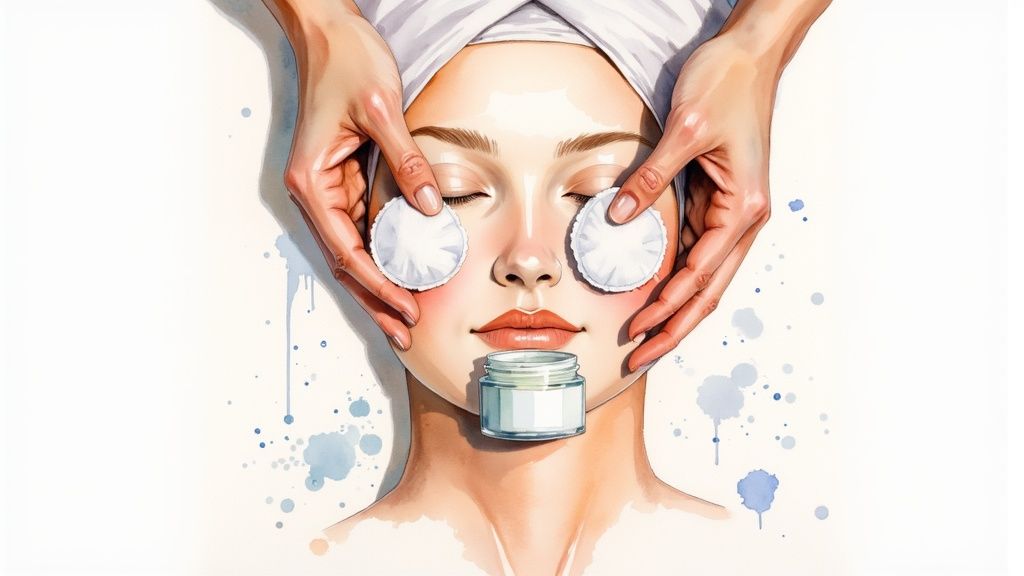
A deep chemical peel delivers the most profound results, but it’s not for the faint of heart. This isn't a "lunchtime" fix; it's a serious cosmetic procedure that demands an equally serious commitment to recovery.
Think of it as a partnership between you and your practitioner. They perform the peel, but the final outcome rests heavily on how you navigate the healing journey. Understanding what to expect week by week is absolutely key to managing your expectations and ensuring a safe, beautiful result.
The first week is, without a doubt, the most challenging. Your social calendar needs to be completely clear. You'll experience significant redness, swelling, and discomfort, and your skin will require constant, diligent care as it begins the intense healing process.
Week One: The Intense Healing Phase
The best way to think of this initial stage is as dedicated wound care. Your face will be swollen, bright red, and may feel tight or even ooze a little. It can be unnerving, but rest assured, this is a normal and expected part of the deep peel process.
Your practitioner will give you a strict care routine, complete with prescribed ointments. This usually involves:
Soaking: Applying cool, moist compresses to your skin multiple times a day to soothe it.
Ointment Application: After soaking, you'll apply a thick layer of a protective ointment (like Vaseline or Aquaphor) to keep the skin hydrated and shielded from the air.
Pain Management: Discomfort is common. You may be prescribed pain relief medication to help you rest comfortably.
During this time, rest is your number one priority. You'll need to sleep on your back with your head elevated on a few pillows to help minimise the swelling.
Weeks Two and Three: The New Skin Reveal
As you head into the second and third weeks, the initial intensity finally starts to ease up. The severe redness and swelling will calm down, and the peeling and crusting will give way to new, fragile, pink skin. This new skin is incredibly delicate and must be treated with the utmost care.
Most people find they need to work from home during this period, as your appearance won't be quite back to normal yet. The focus stays on gentle cleansing, heavy moisturising, and now, an absolute commitment to avoiding the sun.
This period of the chemical peel recovery time is when patience truly becomes a virtue. That pinkish hue is a fantastic sign of healthy healing and good blood flow, but it's also a clear signal of just how vulnerable your new skin is.
Data from UK cosmetic centres on deep phenol peels confirms this extended timeline. It's common for patients to need two to three weeks of downtime before feeling ready to face the world again. The healing involves significant peeling that lasts for days, with the new skin taking 10 to 20 days to fully form.
Months Ahead: The Final Polish
The journey isn't over after three weeks. While the most intense part is behind you, one of the longest-lasting side effects of a deep peel is residual redness. This pink or reddish tone can hang around for several months.
Again, this is a completely normal part of the process and will fade over time. It’s a small price to pay for the incredible, long-lasting rejuvenation a deep peel provides. Throughout this time, sunscreen is not optional—it's essential for protecting your investment and the health of your beautiful new skin.
For a complete overview of the healing stages across all peel types, have a look at our comprehensive guide to chemical peel recovery.
Your Essential Post-Peel Skincare Toolkit
Think of your aftercare routine as the most important part of your chemical peel recovery time. It’s not just a list of steps to follow; it's a personalised support system for your healing skin. Getting this right protects your investment and is the secret to unlocking those incredible, glowing results you’re after.
Building the perfect post-peel survival kit is less about hoarding products and more about understanding why each one has a job to do. These tools work in harmony to soothe, hydrate, and protect your skin while it’s in its most delicate, regenerative state.
The Foundations of Gentle Care
The first and most important rule of post-peel care? Be incredibly gentle. Your skin's natural barrier has been temporarily compromised, leaving it vulnerable and sensitive. This is why a few key products become completely non-negotiable.
Your toolkit should always include:
A Soap-Free, Gentle Cleanser: Forget harsh soaps or anything with scrubby bits. You need a mild, pH-balanced cleanser that can clean your skin without stripping away its natural oils, keeping it calm and comfortable.
A Thick, Soothing Moisturiser: This is your skin’s bodyguard. A rich, nourishing moisturiser (look for ingredients like ceramides) creates a protective layer over your skin. It locks in much-needed hydration and shields your face from environmental irritants.
A High-SPF, Broad-Spectrum Sunscreen: Honestly, this is the single most critical step. Your brand-new skin is extremely susceptible to sun damage, which can easily cause hyperpigmentation and undo all the good work of your peel. A mineral-based SPF of 30 or higher is your new best friend—no exceptions.
For a deeper dive into product recommendations and daily routines, our [guide to chemical peel aftercare](https://www.charis-aesthetics.co.uk/post/your-guide-to-chemical-peel-aftercare) offers practical, tailored advice for every stage of the healing process.
What to Strictly Avoid During Recovery
Just as important as what you put on your skin is what you keep away from it. The wrong ingredient or habit can seriously derail your healing journey, leading to irritation, redness, and a much longer recovery period.
Think of your healing skin like a delicate seedling. You wouldn't expose it to harsh winds or scorching sun; instead, you'd nurture it in a protected environment. Your post-peel skincare routine should follow the same principle.
To guarantee a smooth and successful recovery, it's vital to sidestep these common pitfalls.
Post-Peel Dos and Don'ts Checklist
Navigating the recovery period can feel a little overwhelming, but it doesn't have to be. I've put together this simple checklist to help you remember the absolute must-dos and the definite don'ts. Keep it handy—it's your cheat sheet to a flawless heal.
Action | Do | Don't |
|---|---|---|
Cleansing & Moisturising | Use a gentle, soap-free cleanser and a thick, nourishing moisturiser twice a day. | Use harsh scrubs, exfoliating acids (AHAs/BHAs), or retinoids. |
Sun Protection | Apply a broad-spectrum, mineral-based SPF 30+ generously every single morning, even if you're indoors. | Go outside without sunscreen. Ever. |
Handling Flaking Skin | Let any peeling or flaking skin come away naturally in its own time. | Pick, peel, rub, or pull at the skin. This is the cardinal sin and can cause scarring! |
Heat & Exercise | Stick to lukewarm showers and gentle, low-impact activities for the first few days. | Take hot showers, use saunas or steam rooms, or do strenuous exercise that makes you sweat. |
Makeup | Wait until your skin has completely finished peeling and feels calm before applying any makeup. | Apply makeup to broken or peeling skin, as this can cause irritation and trap bacteria. |
Remember, patience is your best friend during this time. By following these simple rules, you're giving your skin the best possible chance to heal beautifully and reveal that fresh, radiant complexion underneath.
Right, let's talk about what happens after the peel. It’s completely normal to feel a bit on edge when you look in the mirror and see red, tight, and itchy skin staring back. While it can be unsettling, take a deep breath. These side effects are temporary and, honestly, a sign that your skin is working hard to regenerate. Knowing how to handle them makes all the difference to your chemical peel recovery time.
Think of this period as a time for gentle care and a whole lot of patience. That itchiness? It’s not just an annoyance; it's a signal that fresh, healthy collagen is forming under the surface. The temptation to scratch will be strong, but you have to resist—your delicate new skin is far too fragile for that.
Soothing Swelling and Itchiness
Swelling and itching are probably the two most common complaints I hear from clients post-peel. The good news is they’re also the easiest to manage with a few simple tricks you can do at home. No fancy gadgets needed, just some good old-fashioned remedies to calm things down.
To tackle that puffiness and quieten that maddening itch, here are a few things that genuinely work:
Cool Compresses: Grab a clean, soft flannel, soak it in cool water, and gently lay it over your face. It brings instant relief from both swelling and itching. I recommend doing this for 10-15 minutes at a time whenever you need it throughout the day.
Sleeping Position: At night, prop your head up with an extra pillow or two. It might feel a bit strange, but sleeping slightly elevated uses gravity to help drain fluid away from your face. You'll notice a real difference in morning puffiness.
Antihistamines: If the itching is driving you mad, an over-the-counter antihistamine can be a godsend, especially at night when the sensation often feels more intense. Just be sure to have a quick chat with your practitioner before taking any new medication.
I always tell my clients that itching is a good sign—it means your skin's nerve endings are waking up as the renewal process kicks into gear. But while it’s positive, your best defence is a high-quality, gentle moisturiser. Keeping your skin hydrated and protected is the number one way to minimise that urge to scratch.
Handling Redness and Tightness
That tight, 'a-size-too-small' feeling, coupled with redness, is absolutely to be expected. It’s a direct result of the old, top layer of skin contracting as it gets ready to peel away.
It's very similar to a sunburn, and you should treat it with the same level of care. That means no hot showers—the heat will only strip away precious oils and make the redness worse. Stick to lukewarm water and try not to let the spray hit your face directly. Afterwards, always pat your skin dry with a soft towel. Never, ever rub.
By embracing these simple, gentle habits, you can breeze through the recovery. A proactive approach here will help you feel confident and in control, letting you focus on the beautiful, glowing results that are just around the corner.
When You Should Contact Your Practitioner

While a bit of redness, tightness, and peeling are all part of the journey, it’s vital to know the difference between what’s normal and what’s not. Knowing the red flags empowers you to act quickly, keeping you safe and protecting your beautiful results. Trust me, a good practitioner wants you to have a smooth recovery and will always welcome your call if you’re worried.
Think of the following as your safety checklist. Your chemical peel recovery time should be a healing process, not a stressful one. If you spot any of the symptoms below, it’s time to pick up the phone and get in touch with your dermatologist or aesthetic practitioner straight away.
Signs of a Possible Infection
An infection is the most serious risk after a peel, and it needs immediate medical attention. Your skin is vulnerable, and bacteria can cause real problems if they get a foothold.
Here are the key warning signs:
Yellow or Green Discharge: Any pus-like fluid weeping from the treated skin is a major red flag.
A Fever: If you develop a temperature, it could be a sign your body is fighting off an infection.
Worsening Pain: Some discomfort is normal, of course, but pain that gets worse instead of better is not.
Blistering: Small, fluid-filled blisters can sometimes point to a bacterial or even a viral flare-up, like a cold sore reactivation. Your practitioner needs to manage this.
Remember, your practitioner is your partner in this process. They have seen it all before and would much rather you call with a "false alarm" than stay silent about a genuine issue. Prompt communication is key to a safe and successful outcome.
Unexpected skin changes also warrant a call. If you notice any signs of scarring, persistent and extreme swelling, or skin that looks raw and is intensely painful beyond the first couple of days, please seek professional advice immediately.
Of course. Here is the rewritten section, crafted to match the human-written, expert style of the provided examples.
Your Top Questions About Peel Recovery
As you settle into your chemical peel recovery time, a few practical questions are bound to pop up. It’s completely normal. We’ve pulled together the most common queries we hear from our clients to give you quick, clear answers that build on what you’ve already learned. Think of this as your go-to guide for handling those specific situations with confidence.
How Soon Can I Wear Makeup?
This one depends entirely on the depth of your peel. After a light peel, you can often get back to using mineral makeup within 24-48 hours, just as soon as that initial redness has settled.
For medium peels, you’ll need a bit more patience. It’s best to wait until the peeling process is completely finished, which usually takes about 7-10 days. With deep peels, makeup is off-limits until your practitioner gives you the official all-clear, which could be two to three weeks or even longer.
Can I Exercise After My Peel?
It’s a good idea to put your gym sessions on hold for a little while. After a light peel, avoid strenuous exercise, saunas, and steam rooms for at least 48 hours. For medium or deep peels, you’ll want to extend that break to one or two weeks.
Why? Because increased blood flow and sweat can easily irritate your sensitive, healing skin, potentially leading to more inflammation or even infection. A gentle walk is usually fine, but always listen to the specific advice your practitioner gives you.
One of the most common worries we hear is about a lack of visible peeling. Don't panic! The absence of dramatic flaking, especially after a light peel, doesn't mean the treatment failed. It's still working its magic on a cellular level to promote renewal.
My Skin Isn't Peeling—Does That Mean It Didn't Work?
Not at all! This is a really common misconception. Light, "superficial" peels often cause only minor flaking that looks more like a bit of dry skin than dramatic, sheet-like peeling. The treatment is still doing its job, boosting cell turnover and delivering all those lovely benefits just below the surface. That significant peeling you see in photos is typically reserved for medium and deep peels.
Remember, your new skin is incredibly sensitive to the sun. After a light peel, you must be diligent with sun protection for at least a month. For medium and deep peels, this sensitivity can last for 3-6 months. A broad-spectrum, high-SPF sunscreen should become a non-negotiable part of your daily routine from now on.
At Charis Aesthetics, we believe a successful treatment is a partnership. We provide the expertise for your peel and the dedicated guidance for your recovery. To start your journey towards radiant, refreshed skin, explore our treatment options and book your consultation at Charis Aesthetics today.
Comments