


Your Guide to Chemical Peel Side Effects
- Charis Aesthetics
- Aug 9, 2025
- 17 min read

Embarking on a chemical peel journey is an exciting step towards beautifully refreshed skin, but it's smart to go in with your eyes wide open about the potential reactions. The most common chemical peel side effects are actually just temporary signs that the treatment is working—things like redness, dryness, and a bit of flaking. The intensity of these effects, and how long they stick around, all comes down to the strength of the peel you opt for.
Understanding Your Risk of Side Effects
A chemical peel is essentially a controlled reset button for your skin, but not all resets are created equal. The depth of the treatment—whether it's superficial, medium, or deep—is the single biggest factor that dictates what kind of side effects you might see. A light peel can feel a lot like a mild sunburn, while a deeper one demands a bit more patience and downtime.
It can feel a bit daunting to think about risks, but it helps to break them down. This visual guide gives you a clear picture of the hierarchy of potential side effects, from the totally normal and mild to the much rarer, more serious possibilities.
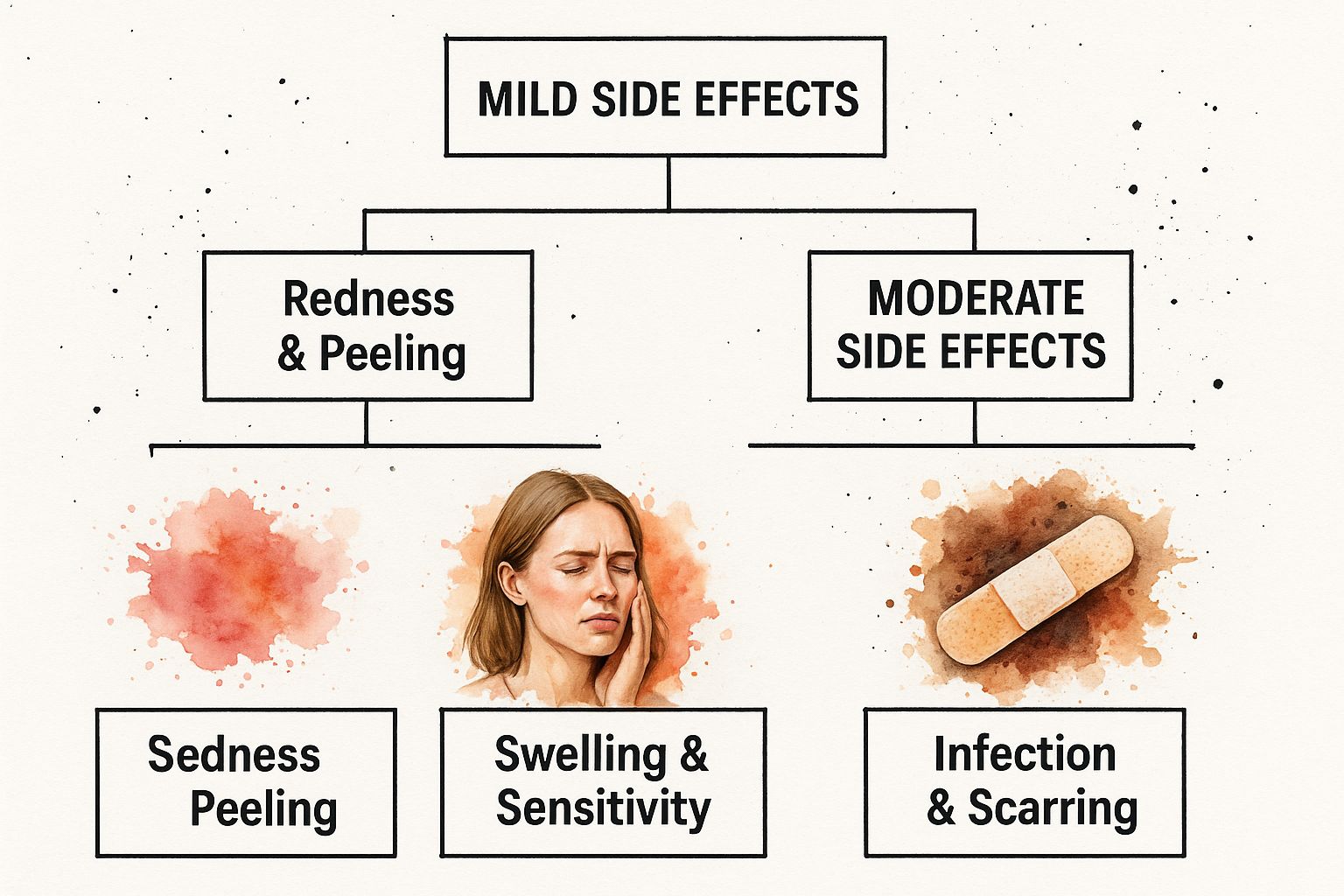
As you can see, expected reactions like redness are at one end of the spectrum. On the other end, you have more significant complications like infection, which are far less likely and almost always associated with the most intensive treatments.
The Peel Depth Dictates the Risk
The principle here is really straightforward: the deeper a peel goes, the more dramatic the results will be. But with that comes a higher chance of side effects and a longer recovery period.
To make this even clearer, let's look at how the risk changes with each type of peel.
Side Effect Risk by Chemical Peel Depth
This table breaks down the common side effects and what you can generally expect at each treatment level.
Side Effect | Superficial Peel | Medium Peel | Deep Peel |
|---|---|---|---|
Redness | Mild, like a sunburn. Lasts a few hours to a day. | Moderate to significant. Can last several days to a week. | Intense and prolonged. Can last for weeks or even months. |
Peeling/Flaking | Light flaking, similar to dry skin. Lasts 2-3 days. | Obvious peeling, often in sheets. Lasts 5-7 days. | Significant shedding and crusting. Lasts 7-14 days. |
Swelling | Minimal, if any. | Mild to moderate, especially around the eyes. | Significant, requiring careful post-procedure management. |
Pigment Changes | Very rare. | Low risk of temporary hyperpigmentation (dark spots). | Higher risk of both hypo (light spots) and hyperpigmentation. |
Scarring | Extremely rare. | Rare, but possible. | A known, though uncommon, risk that requires expert care. |
Infection | Very rare. | A low but recognised risk. | A significant risk requiring strict aftercare. |
Essentially, as you move from left to right on the table, the intensity and duration of each side effect increase. This is why a thorough consultation is so vital—it’s all about matching the right peel intensity to your skin goals and what you're comfortable with in terms of recovery.
Superficial Peels: Think of these as the gentlest option. They only work on the very top layer of skin (the epidermis). You can expect minimal fuss—a bit of redness, some dryness, and maybe minor flaking that's gone in a few days. Easy.
Medium Peels: These reach a little deeper into the upper part of the dermis, giving you more noticeable results for things like fine lines and sun spots. Because they do more, the side effects are more pronounced. Swelling, proper peeling, and redness that hangs around for longer are all part of the package.
Deep Peels: These are the heavy hitters, penetrating deep into the skin to tackle serious sun damage or deep-set wrinkles. They carry the highest risk and require a significant recovery period, but the results can be truly transformative.
A great way to think about it is like gardening. A superficial peel is like lightly raking away dead leaves from the lawn—minimal disturbance. A deep peel is more like tilling the soil; it causes a lot of initial disruption but sets the stage for incredible long-term renewal.
Here in the UK, the official guidelines reflect this escalating risk. While side effects from superficial peels are typically mild, the risks climb with the peel's depth. In the UK, regulations stress that medium and deep peels should only ever be performed in a clinical setting by highly trained professionals to guarantee your safety. You can find out more about this from the official guidance on peel safety from the ACE Group.
Ultimately, understanding how peel depth connects to potential side effects is your superpower. It allows you to have a proper, informed chat with your practitioner, ensuring the treatment you choose not only meets your skin goals but also fits your lifestyle and comfort level with the healing process.
The Normal Side Effects You Can Expect

Let's be honest, after a chemical peel, your skin will almost certainly look worse before it looks better. Think of it as a bit of a transformation phase, like a caterpillar in its chrysalis. It’s not always glamorous, but the glowing, renewed skin that emerges is well worth the wait.
This initial healing period comes with several common and completely expected chemical peel side effects. Knowing what's coming helps take the guesswork out of recovery, reassuring you that your skin is just doing exactly what it’s supposed to do.
Redness and That Sunburn Sensation
The first thing you’ll probably notice is some redness, especially after a superficial or medium peel. For a light peel, this often looks like a mild sunburn and might only last a few hours.
A medium peel, on the other hand, will bring on a more intense and lasting redness that could stick around for a couple of days. This is a sign of inflammation—the body's natural first response to kick-start the healing and renewal process. You might also feel a slight stinging or warmth, but this usually fades quite quickly.
The Feeling of Tightness and Dryness
In the days after your treatment, it’s completely normal for your skin to feel tighter and drier than usual. This is actually a good sign, as it’s the lead-up to the main event: the peeling. The peel solution has dehydrated the outermost layer of damaged skin, getting it ready to shed.
This is a crucial part of the exfoliation. It’s so important to resist slathering on heavy creams that your practitioner hasn’t recommended. Stick to the gentle, hydrating products in your aftercare plan to support your skin without getting in the way of the peel's work.
Think of this stage like a snake shedding its skin. The old layer becomes tight and dry right before it separates, revealing the smooth, new skin underneath. That’s precisely what your face is doing, just on a microscopic level.
Flaking and Peeling: The Main Event
This is the side effect everyone associates with a chemical peel, and it's the clearest sign that the treatment is working. Depending on the peel's strength, this can range from light, dusty flaking to more noticeable shedding in small sheets.
It can be incredibly tempting to pick or pull at the loose bits of skin, but please don’t. This is one of the worst things you can do. Picking at peeling skin can lead to irritation, post-inflammatory hyperpigmentation (those pesky dark spots), and even scarring. Just let your skin do its thing.
Here’s a rough timeline for what to expect:
Light Peels: Flaking usually kicks in around day two or three and is typically done by day five. It's often subtle enough to be managed with a good moisturiser.
Medium Peels: The peeling often starts around day three and can be more obvious, lasting for about five to seven days.
Deep Peels: This is a much bigger deal, involving significant shedding and potential crusting. You'll need a much longer recovery period of up to two weeks or more.
The visible results after all this shedding can be truly remarkable. To get a better feel for the journey, you can browse our gallery of [chemical peel before and after transformations for 2025](https://www.charis-aesthetics.co.uk/post/6-chemical-peel-before-after-transformations-a-2025-guide). Seeing these real-life results can help you keep your eyes on the prize while you’re navigating the temporary healing phase.
Ultimately, these normal side effects are just temporary hurdles on the path to healthier, more radiant skin. Patience and sticking to your aftercare instructions like glue are your best allies for a smooth and successful recovery.
Serious Complications and When to Seek Help

While the vast majority of chemical peels go off without a hitch, resulting in nothing more than the expected redness and flaking, it’s vital to know about the more serious, albeit rare, potential complications. Knowing the warning signs isn't about causing alarm; it's about empowering you to be a proactive partner in your own care.
Being able to tell the difference between a normal healing process and a developing issue means you can act quickly and get professional help when it really matters. Think of this knowledge as your safety net, allowing you to enjoy the benefits of your treatment with complete peace of mind.
Most chemical peel side effects are temporary, but a handful of issues need immediate attention from your practitioner to prevent long-term problems.
Spotting the Signs of an Infection
An infection after a chemical peel is rare, but it’s one of the most significant risks. Your skin's protective barrier is temporarily compromised after a treatment—especially a medium or deep peel—making it more vulnerable to bacteria.
It's crucial to distinguish between normal post-peel discomfort and a brewing infection. Normal healing involves some redness, tightness, and maybe a mild stinging that gradually gets better. An infection, on the other hand, gets progressively worse.
Seek immediate medical advice if you notice:
Increasing Pain or Swelling: Discomfort that intensifies after the first 24-48 hours instead of improving.
Pus or Discharge: Any yellow or green-tinged fluid weeping from the treated area.
A Foul Odour: This is a clear indicator of bacterial activity.
Excessive Heat: The treated skin feels very hot to the touch.
Fever: A sign that your whole body is fighting something off.
Never hesitate to call your practitioner if you suspect an infection. Prompt treatment, usually with antibiotics, is essential to prevent the risk of permanent scarring.
Understanding Changes in Skin Colour
One of the more feared chemical peel side effects is a lasting change in your skin’s pigmentation. These changes usually fall into two categories, and the risk climbs with deeper peels or if you slack on your post-peel sun protection.
Your skin's pigment-producing cells, called melanocytes, are like sensitive artists. After the controlled trauma of a peel, they can either overreact and create too much colour or shut down and stop producing it altogether.
This is exactly why understanding these potential outcomes is so important.
Post-Inflammatory Hyperpigmentation (PIH)
Post-Inflammatory Hyperpigmentation, or PIH, is the technical name for the dark spots or patches that can pop up after an injury to the skin—a chemical peel included. It happens when those melanocyte cells go into overdrive, producing excess melanin as part of the inflammatory response.
This complication is more common in people with darker skin tones (Fitzpatrick types IV-VI). While these dark patches can sometimes fade on their own over many months, they often need further treatment to resolve. Diligent sun protection is your number one defence against PIH.
Hypopigmentation
The flip side of the coin is hypopigmentation—the permanent loss of skin colour, leaving behind white or pale patches. This happens when the melanocytes are damaged or destroyed by a peel that was too aggressive for your skin, stopping them from producing pigment.
Unlike PIH, which can often be treated, hypopigmentation is usually permanent. This is one of the most serious risks tied to deep peels, particularly phenol peels, and it highlights why choosing a highly experienced, qualified practitioner who truly understands the nuances of your skin is non-negotiable.
The Risk of Scarring
Scarring is the rarest but most severe complication of a chemical peel. It's almost exclusively a risk with deep peels or when a major issue, like a bad infection or improper wound care, follows a medium peel.
Scars can be either atrophic (depressed) or hypertrophic (raised). The risk is higher if you have a personal or family history of keloid scarring, have recently taken certain acne medications like isotretinoin, or if you pick at peeling skin during recovery.
To minimise this risk, you must give your practitioner a complete medical history and follow every single aftercare instruction to the letter. Protecting your healing skin is paramount. Your role in the outcome is just as important as your practitioner’s skill during the procedure itself.
How Skin Type Influences Your Peel Outcome
Think of your skin as a canvas. A fair, resilient canvas might handle a bold artistic technique with no trouble, but a delicate, richly pigmented canvas demands a much more careful and nuanced approach. The same logic applies here. A good practitioner doesn’t just focus on the blemish or wrinkle you want to fix; they start by assessing the entire canvas.
Understanding the Fitzpatrick Scale
To bring some consistency to this assessment, professionals often use the Fitzpatrick scale. This is a system that classifies skin into six types based on its amount of pigment (melanin) and how it reacts to the sun—specifically, how easily it burns or tans.
Types I-III: Lighter skin tones with less melanin. They tend to be more susceptible to sun damage and visible signs of ageing like fine lines, but they generally have a lower risk of pigment-related side effects from peels.
Types IV-VI: Deeper skin tones that are richer in melanin. While this gives them some natural protection against UV rays, it also means their pigment-producing cells (melanocytes) are more reactive.
This reactivity is the crucial factor. For anyone with a deeper skin tone, any kind of inflammation or 'injury'—and a chemical peel is a controlled injury—can trigger these cells to either overproduce or underproduce pigment, leading to unwanted chemical peel side effects.
Why Deeper Skin Tones Have a Higher Risk
When it comes to peels, the main concern for Fitzpatrick types IV, V, and VI is the increased risk of these pigmentary changes. The very cells that give the skin its beautiful colour are also the ones that can respond unpredictably to treatment.
Think of your pigment cells like sensitive alarm systems. In fairer skin, that alarm is set to a low volume. In deeper skin tones, the alarm is incredibly sensitive and can be set off far more easily, sometimes blaring loudly (hyperpigmentation) or shutting down completely (hypopigmentation).
This sensitivity makes post-inflammatory hyperpigmentation (PIH)—the development of dark spots after an injury—a much more significant risk. At the same time, if a peel is too aggressive, there's a higher chance of hypopigmentation, which is a loss of colour in the skin.
Matching the Peel to Your Skin Profile
This absolutely does not mean that people with deeper skin tones can't benefit from chemical peels. It simply means that selection and customisation are critical. A skilled and experienced practitioner will know exactly how to choose the right type of peel and concentration for your skin.
Safe Peel Strategies for Deeper Skin Tones Often Include:
Starting with Superficial Peels: Acids like mandelic acid or lower-strength lactic acid are often the top choice. Their larger molecules penetrate the skin more slowly and evenly, causing less irritation.
Pre-Treatment Preparation: Your practitioner might recommend using specific skincare products (like tyrosinase inhibitors) for a few weeks before your peel. This helps to calm your pigment cells and get the skin ready.
A "Low and Slow" Approach: Performing a series of gentler peels over time often produces safer and more predictable results than one single, aggressive treatment.
While standard side effects like redness and peeling are common for everyone, UK dermatologists emphasise that the risk of long-lasting issues is heavily dependent on a patient's Fitzpatrick type. For those with skin types IV to VI, the chance of significant pigment changes or even scarring is higher, demanding a cautious approach from a specialist. Superficial peels are widely seen as the safest option for all, but every peel requires strict aftercare. You can find out more about how dermatologists view these risks on Medical News Today.
Ultimately, having an open and honest conversation with your practitioner about your skin type, history, and goals is the most important step you can take. This collaborative approach ensures the treatment plan is perfectly aligned with your skin's unique needs, minimising risk and paving the way for the best possible results.
Your Essential Post-Peel Aftercare Plan
What you do after leaving the clinic is just as important—if not more so—than the peel itself. A solid aftercare routine is your best defence against potential chemical peel side effects. It’s how you guarantee a smooth recovery and protect the beautiful, fresh skin you’ve just invested in.
Think of your skin post-peel like a delicate new seedling. It’s brand new, vulnerable, and needs the perfect environment to grow strong and healthy. This guide is your practical playbook for creating that environment, turning what could be an awkward recovery into a simple, straightforward healing process.
The Two Golden Rules of Aftercare
While your practitioner will give you specific instructions, all aftercare really boils down to two non-negotiable principles. If you remember nothing else, remember these two things.
Be Gentle: Your skin's protective barrier has been temporarily thinned out. It needs to be treated with the utmost care, which means sticking to the mildest products and avoiding any kind of friction or harsh ingredients.
Be Protective: This new layer of skin is incredibly susceptible to damage, especially from the sun. Protecting it from UV rays is the single most important thing you can do to prevent complications like hyperpigmentation and lock in the results you paid for.
Follow these two rules religiously, and you're already halfway to a successful outcome.
Your Day-by-Day Recovery Guide
Navigating that first week can feel a bit uncertain, but having a simple routine makes all the difference. Your main goals are to keep your skin clean, hydrated, and protected without causing any irritation whatsoever.
Cleansing Your Delicate Skin
You absolutely must keep the treated area clean to prevent infection, but your usual face wash is almost certainly too harsh right now. For the first few days, just use cool or lukewarm water and your fingertips—that’s it.
After about 24-48 hours, you can usually bring in a very gentle, soap-free cleanser. Look for creamy, non-foaming formulas that are free from fragrances, alcohol, and any exfoliating acids. When you’re done, gently pat your skin dry with a soft, clean towel. No rubbing allowed!
Imagine you're washing a delicate silk garment. You wouldn't scrub it with a harsh detergent; you’d handle it with care to avoid snagging the fibres. Treat your new skin with that same level of gentleness.
Moisturising to Support Healing
Hydration is absolutely essential for healing. The right moisturiser will soothe discomfort, reduce that tight feeling, and help your skin’s barrier repair itself. But not just any old moisturiser will do.
Your practitioner will probably recommend a specific product. If not, look for moisturisers with these hero ingredients:
Hyaluronic Acid: This stuff holds many times its own weight in water, so it delivers intense hydration without feeling heavy or greasy.
Ceramides: These are lipids that are a natural part of your skin barrier. Applying them topically helps patch up and strengthen that protective layer.
Niacinamide: Known for its calming and anti-inflammatory properties, this can really help take the edge off any post-peel redness.
Slather your moisturiser on generously whenever your skin feels tight or dry, especially after cleansing. This will also make the inevitable flaking and peeling much less noticeable.
The Unbreakable Rule of Sun Protection
This deserves its own section because it is, without a doubt, the most critical part of your aftercare. Your freshly revealed skin has almost no natural defence against UV rays. Sun exposure now can quickly lead to a severe sunburn and, more troublingly, post-inflammatory hyperpigmentation (PIH).
For at least the first two weeks post-peel, you have to be incredibly diligent.
Use Broad-Spectrum Sunscreen: Apply a high-SPF sunscreen (SPF 50 or higher) every single morning. Yes, even if it’s cloudy. Yes, even if you’re staying indoors.
Reapply Frequently: Sunscreen isn't a one-and-done deal. You must reapply it at least every two hours if you are outdoors.
Seek Shade: Make it a habit to stay out of direct sun, especially during the peak hours of 10 am to 4 pm.
Wear Protective Gear: A wide-brimmed hat and sunglasses are your new best friends during recovery.
This isn’t just a summer rule; UV radiation is present all year round. Skimping on sun protection can completely undo the benefits of your peel and cause the very problems you were trying to fix in the first place. For a deeper dive into aftercare, check out [Your Guide to Chemical Peel Aftercare](https://www.charis-aesthetics.co.uk/post/your-guide-to-chemical-peel-aftercare) for more detailed tips.
Managing Flaking and Reintroducing Your Routine
It’s so tempting to pick or scrub at flaking skin, but you must resist. This is a fast track to scarring and dark spots. Just let the skin shed on its own timeline. Applying your gentle moisturiser can help soften the flakes and make them less obvious.
Most people can start reintroducing makeup after the majority of the peeling has finished, which is usually around 5 to 7 days after a light or medium peel. Always apply it to clean, well-moisturised skin.
As for your regular skincare routine, hold off on active ingredients like retinoids (retinol), vitamin C, or exfoliating acids (AHAs/BHAs) for at least one to two weeks, or until your practitioner gives you the all-clear. Reintroducing these potent products too soon will only cause significant irritation. Start slowly when you do, maybe using them every other night at first, to let your skin get used to them again. By following this simple plan, you take control of your healing and make sure your peel delivers the radiant results you’re looking for.
Your Questions Answered: Navigating Peel Side Effects
It's completely normal to have questions before diving into the world of chemical peels. While we've talked about what a typical recovery looks like and the warning signs of a real problem, it helps to tackle the most common concerns head-on. Think of this as your quick-reference guide to the queries we hear most often about chemical peel side effects.
Getting the right information upfront helps you feel confident and prepared for your treatment, making sure there are no surprises along the way.
How Long Do Chemical Peel Side Effects Last?
This is easily one of the most common questions, and the honest answer is: it all comes down to the peel's depth. The more intensive the treatment, the longer your skin will need to heal.
Superficial Peels: This is your shortest and mildest recovery. Side effects like a bit of redness, dryness, and light flaking usually wrap up in about 3 to 7 days. Your skin should feel pretty much back to normal within a week.
Medium Peels: These peels create a more noticeable healing phase. You can expect redness, some moderate swelling, and more significant peeling (sometimes in small sheets) that lasts for 7 to 14 days. It's not uncommon for a subtle pinkish tone to stick around for a few weeks as your new skin settles in.
Deep Peels: These treatments require the most patience. Be prepared for significant swelling, redness, and crusting for at least two weeks. Lingering redness is normal and can sometimes persist for up to three months.
Sticking to your aftercare plan is the best thing you can do to help your skin heal beautifully. For a more detailed look at the day-by-day journey, you can read your guide to chemical peel recovery time.
Can a Chemical Peel Permanently Damage Skin?
This is a very important and valid concern. The short answer is that in rare situations, a chemical peel can cause permanent damage, like scarring or lasting changes in skin colour.
The biggest risks are hypopigmentation (a permanent loss of skin colour that leaves white patches) and scarring. It's crucial to understand that these complications are almost exclusively linked to deep peels or when a treatment is done by someone who is unqualified or inexperienced.
This is exactly why your choice of practitioner is the single most important decision you'll make. A skilled, certified professional understands the delicate science of matching the right peel to the right skin type, which dramatically minimises these risks.
People with darker skin tones also have a naturally higher risk of pigment changes. However, being strict with your pre- and post-peel care—especially being relentless with sun avoidance—is your best defence against any lasting issues.
What Are the Signs of an Infection After a Peel?
An infection is a serious complication, but thankfully, it's also a rare one. Because a peel temporarily compromises your skin's natural barrier, it becomes more vulnerable. Knowing what to look for means you can act fast.
Remember, normal healing involves redness and discomfort that gets a little better each day. An infection is the opposite—it gets progressively worse.
Key warning signs of an infection include:
Worsening Pain and Swelling: If things feel more sore or swollen after the first 48 hours, instead of improving.
Yellow or Green Discharge: Any pus-like fluid is a definite red flag.
A Foul Odour: This is a clear signal of bacterial activity.
Fever or Chills: A sign your body is fighting a more widespread infection.
If you spot any of these symptoms, you must contact your practitioner immediately. Getting started on antibiotics quickly is essential to prevent scarring and other long-term problems.
Is It Normal for Skin to Look Worse After a Peel?
Yes, it is 100% normal for your skin to go through an "ugly duckling" phase before it reveals the final, glowing result. This stage is an expected and totally necessary part of the skin's renewal process.
Right after the treatment, your skin will look red and feel tight. Soon after, it will start to flake or peel. You might even notice that existing brown spots or areas of pigmentation look a bit darker for a few days before they flake away with the old skin.
This is all a brilliant sign that the peel is doing its job. It's breaking down the damaged outer layers to make way for the fresh, healthy skin underneath. Be patient during this time, and whatever you do, never pick at the peeling skin. Picking can lead to irritation and cause the very side effects you’re trying to avoid, like hyperpigmentation and scarring. Just trust the process and let your skin shed on its own timeline.
At Charis Aesthetics, we believe that a safe and successful treatment begins with education and a personalised approach. We are dedicated to ensuring you feel fully informed and comfortable every step of the way, matching our science-backed treatments to your unique skin needs for natural, beautiful results. Learn more about our services and book your consultation today.
Comments