


How to Prevent Forehead Wrinkles in the UK
- Charis Aesthetics
- Jul 20, 2025
- 14 min read

When it comes to preventing forehead wrinkles, it really boils down to two things: being smart about the sun and using the right skincare. The single most impactful habit you can get into is wearing a broad-spectrum SPF every single day. This shields your skin from UV damage, which is the number one cause of premature ageing. Think of it as the foundation – without it, everything else you do won't work nearly as well.
Your Essential First Steps to a Smoother Forehead
If you're wondering how to stop forehead wrinkles before they start, the answer isn’t a complicated, ten-step routine. It's about nailing a few simple, powerful actions. From my experience in the clinic, clients who truly master these basics are the ones who see the most significant, lasting improvements.
The most critical step, without a doubt, is diligent sun protection. And I don’t just mean for beach holidays. It's an everyday, all-year-round necessity, even on those grey, overcast days we get so often in the UK.
Ultraviolet radiation (both UVA and UVB) is the primary external factor that relentlessly breaks down collagen and elastin—the proteins that keep your skin firm, bouncy, and smooth. This damage is what leads to static wrinkles, those pesky lines that hang around even when your face is completely at rest.
Start with Sunscreen and Retinoids
One of the most effective things you can do is simply minimise your sun exposure and make a high-SPF sunscreen a non-negotiable part of your morning. You need at least SPF 30. Excessive UV radiation doesn't just give you a tan; it actively accelerates skin damage and fast-tracks the formation of wrinkles. Studies have shown time and again that consistent sunscreen use significantly slows down how quickly our skin ages. For a deeper dive into how sun protection fits into a complete skincare strategy, you can read our ultimate guide to healthier, radiant skin.
Once you've got sun protection sorted, the next pillar of your routine should be a retinoid at night. Retinoids are derivatives of vitamin A and are pretty much the gold standard in dermatology. They’re celebrated for their proven ability to kick-start collagen production and speed up skin cell turnover. This whole process helps to smooth out the fine lines you already have while preventing new ones from settling in. A great way to start is with an over-the-counter retinol, applying it just a few nights a week to let your skin get used to it.
Key Takeaway: Don't underestimate the power of this simple duo. Daily SPF protects your skin from damage tomorrow, while a nightly retinoid works to repair and rebuild from yesterday. Mastering these two steps creates a powerhouse anti-ageing system and a solid base for any other products or treatments you might consider down the line.
To get you started, I've put together a quick summary of the most impactful daily habits you can build.
Core Wrinkle Prevention Actions
Action | Why It Works | UK-Specific Tip |
|---|---|---|
Daily Broad-Spectrum SPF | Shields skin from UVA/UVB rays, the primary cause of collagen breakdown and premature ageing. | Even on cloudy UK days, UVA rays penetrate clouds and windows. Make SPF 30+ a non-negotiable final step in your morning routine. |
Introduce a Retinoid | A Vitamin A derivative that boosts cell turnover and collagen production, smoothing fine lines. | Start with a low-strength retinol 2-3 times per week at night to build tolerance, as UK weather can make skin more prone to dryness. |
Prioritise Hydration | Well-hydrated skin looks plumper and fuller, which immediately softens the appearance of lines. | Look for moisturisers with hyaluronic acid or ceramides to combat the drying effects of central heating in colder months. |
Focusing on these core actions first will pay dividends. It's not just about what you're putting on your skin; it’s about creating consistent habits that will protect and preserve your skin's health for years to come.
Building Your Anti-Wrinkle Skincare Routine

Once you've got your daily sun protection sorted, it's time to bring in the heavy hitters. These are the powerful, targeted ingredients you hear everyone talking about—the ‘superhero’ actives that play a specific role in keeping your skin smooth and resilient. Think of it as switching from defence to a proactive attack on those forehead lines.
Rather than just throwing a list of ingredients at you, let's break down what they actually do for your skin. The goal here is to build a simple, effective morning and evening routine that layers these actives smartly, without causing irritation. It’s all about creating synergy, not just slathering on products.
Your Morning Skincare Line-Up
Your morning routine really has two main jobs: protect and hydrate. After a gentle cleanse, you want to focus on antioxidants and moisture-locking ingredients that will act as your skin's shield for the day ahead.
Vitamin C Serum: This is your non-negotiable morning antioxidant. It gets to work neutralising the free radical damage from pollution and UV rays that your sunscreen might not catch. It’s also brilliant for boosting collagen and brightening your overall complexion. For proven results, look for a serum containing L-ascorbic acid.
Hyaluronic Acid: Think of this molecule as a moisture magnet. It can hold up to 1,000 times its weight in water, which is incredible for plumping up the skin. Applying a hyaluronic acid serum or a moisturiser that contains it can make fine dehydration lines look instantly less obvious.
Moisturiser & SPF: The final, crucial step. A good moisturiser will lock in all the goodness from your serums, followed by a broad-spectrum SPF 30 or higher. This seals your protective barrier and sets you up for the day.
Your Evening Skincare Power Players
Night-time is your skin's repair shift. This is the prime time to introduce ingredients that really get to work on cellular renewal and collagen production. This is where the real anti-wrinkle magic happens.
Retinoids are arguably the most-studied and proven topical ingredients for reducing fine lines and wrinkles. It typically takes three to six months of consistent use to see noticeable improvements, with the best results appearing after six to 12 months.
The absolute cornerstone of any serious evening anti-ageing routine is a retinoid. This family of vitamin A derivatives is the gold standard for a reason—they genuinely work by ramping up collagen production and speeding up skin cell turnover.
Here’s a quick guide to the options available in the UK:
Retinol: This is the most common over-the-counter version and a fantastic place to start. I always advise clients to begin with a low concentration (around 0.2% or 0.3%) and use it just two or three nights a week. This lets your skin get used to it before you gradually increase how often you apply it.
Tretinoin: This is the more potent, prescription-strength retinoid. It delivers faster and more dramatic results but comes with a higher risk of initial irritation, redness, and peeling. Because of its strength, it should only ever be used under the guidance of a doctor or dermatologist.
To complement your retinoid, peptides are another brilliant addition to your evening routine. They are essentially short chains of amino acids that act as the building blocks for proteins like collagen and elastin. Using a peptide-rich serum or moisturiser helps to signal your skin to produce more of these crucial firming proteins, giving your skin an extra supportive boost.
Lifestyle Habits That Smooth Your Skin

You can have the most advanced skincare routine in the world, but if your daily habits are working against you, it’s an uphill battle. The truth is, what you do every day matters just as much as the products you put on your face.
Let's explore some simple, yet powerful, lifestyle adjustments that can make a huge difference in preventing forehead wrinkles and boosting your skin's overall health.
Think of your skin as a mirror reflecting your internal wellbeing. When you’re properly hydrated, your skin cells are plump and full, which instantly softens the look of fine lines. Dehydration does the opposite, making skin appear dull and causing those tiny crinkles to look much more obvious. A good goal is at least 1.5 to 2 litres of water a day.
Fuel Your Skin From Within
Your diet plays a massive part in your skin's elasticity and its ability to repair itself. A diet high in processed foods and sugar is known to promote inflammation, which actively breaks down the collagen and elastin that keep your skin firm.
Instead, try to focus on foods rich in antioxidants. These are like your body’s personal bodyguards, fighting off the cellular damage that leads to premature ageing.
To give your skin a real boost, try adding more of these to your plate:
Berries and citrus fruits: They’re packed with Vitamin C, which is absolutely essential for producing collagen.
Leafy greens: Think spinach and kale, both of which are loaded with skin-loving vitamins and antioxidants.
Healthy fats: Avocados, nuts, and seeds provide fatty acids that help maintain a strong, healthy skin barrier.
By fuelling your body with these nutrients, you’re giving your skin the building blocks it needs to stay resilient against the daily stressors that can etch in those forehead lines.
Manage Stress and Unconscious Expressions
Ever catch a glimpse of yourself in the reflection of your computer screen, frowning in concentration? Or maybe you raise your eyebrows a lot when you talk. These repetitive muscle movements are a primary cause of dynamic wrinkles—the lines that only appear when you make an expression.
Over time, if you don't manage them, they can settle in and become permanent static wrinkles.
It’s not just the movement, either. High, chronic stress levels ramp up the production of cortisol, a hormone that breaks down collagen and elastin. This stress response doesn't just affect your mood; it can directly fast-track the formation of wrinkles on your forehead.
The first step is simply becoming more aware of these habits. If you work at a desk, popping a small mirror nearby can be a great reminder to relax your face. You can also try stress-reducing techniques like deep breathing, meditation, or even using facial tape at night to gently encourage your muscles to stay relaxed.
Finally, never, ever underestimate the power of a good night's sleep. It's during those precious hours that your skin goes into full repair mode, regenerating cells and producing new collagen. Skimping on sleep disrupts this vital process, leaving your skin looking tired and making lines more prominent. Prioritising 7-9 hours of quality rest is one of the easiest and most effective things you can do for your skin.
Exploring Professional Anti-Wrinkle Treatments in the UK
When your daily skincare routine and healthy habits just aren’t cutting it anymore, it’s natural to wonder what comes next. If you’re looking for more noticeable improvements for those stubborn forehead wrinkles, it might be time to explore professional treatments.
The UK aesthetics market is full of highly effective, science-backed options that work on a much deeper level than any cream or serum can. These clinical procedures get right to the root of the problem, whether it's overactive muscles or a loss of skin volume. Stepping into the world of aesthetic treatments can feel like a big decision, but understanding your options makes it far less daunting.
Understanding Anti-Wrinkle Injections
Let's start with the most famous treatment for forehead lines: anti-wrinkle injections. You've probably heard of them by brand names like Botox. They have become incredibly popular in the UK, with over 40,000 Google searches for "Botox" every month. It’s estimated that over 900,000 of these treatments are performed each year.
So, how do they work? The injections temporarily relax the frontalis muscle in your forehead—that’s the one you use to raise your eyebrows. Because this repetitive movement is what causes horizontal lines, softening it gives the skin a chance to smooth out. This prevents those dynamic lines (the ones you see when you move your face) from becoming permanently etched in.
Crucial Insight: The key to a beautiful, natural-looking result is choosing a medically qualified and experienced practitioner. With over 3,000 complaints about cosmetic injections in a single year, the risk of going to an unqualified injector is very real. Your safety must always come first.
The results are fantastic, but they aren’t permanent. You can typically expect them to last between three to four months. For a deep dive into what the treatment involves, have a look at our complete expert guide to anti-wrinkle injections.
Other Powerful Clinical Options
Beyond injections, there are several other fantastic treatments that can improve skin texture and tackle deeper wrinkles. First, though, let's talk prevention. Sunscreen is your best friend.
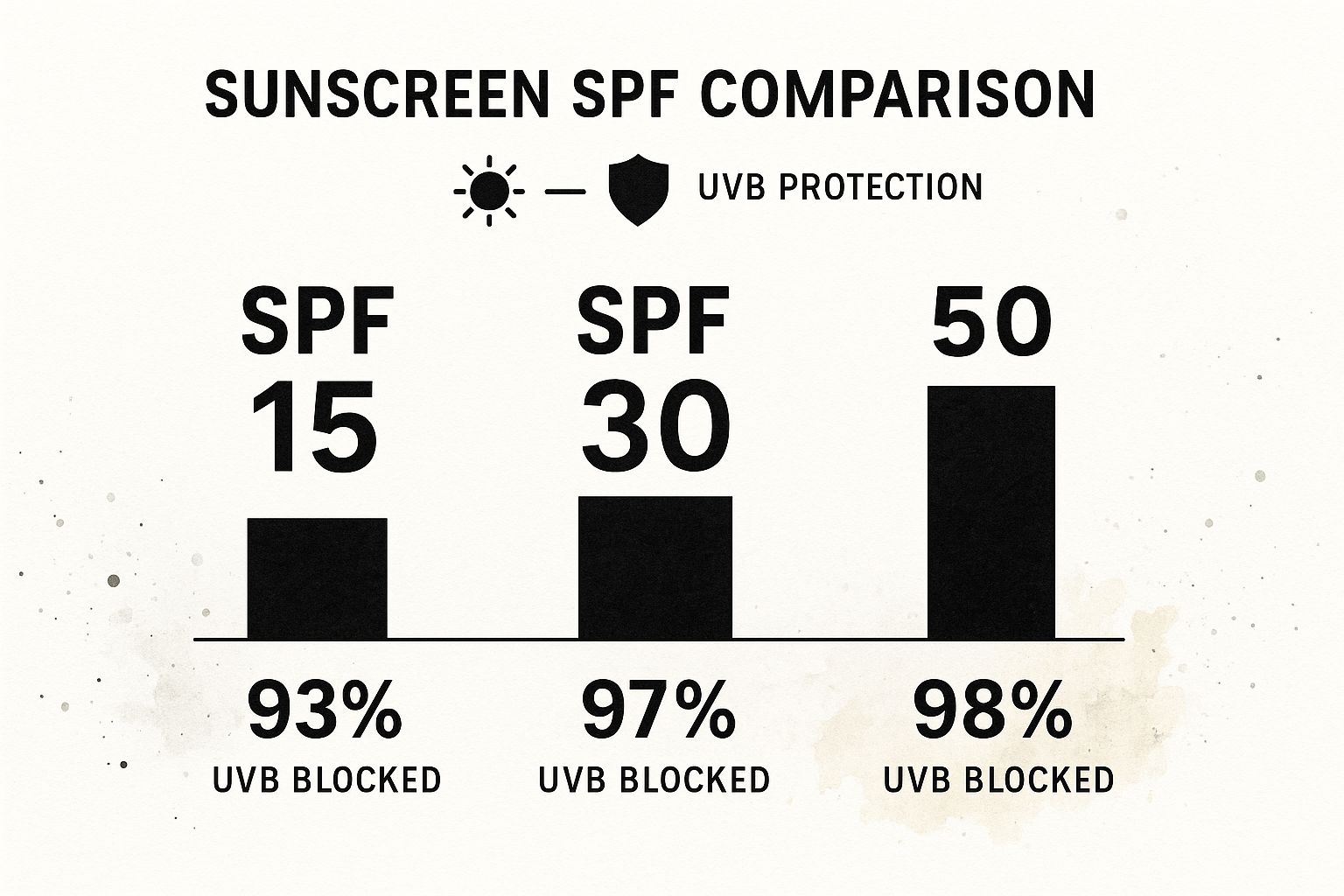
This image highlights just how important daily SPF is. While SPF 50 offers a little more protection, a good quality SPF 30 blocks 97% of harmful UVB rays, making it a powerful tool in your anti-wrinkle arsenal.
Here are a few other clinical options to consider:
Dermal Fillers: If you have very deep, static lines that are visible even when your face is at rest, dermal fillers are an excellent solution. They use hyaluronic acid to add volume back into the crease, literally filling the line from underneath for an instantly smoother look.
Chemical Peels: These treatments use specialised acids to exfoliate the outer layers of your skin. This not only gets rid of dead cells for a brighter complexion but also kick-starts collagen production, helping to soften fine lines over time.
Microneedling: Also known as collagen induction therapy, this procedure uses tiny needles to create controlled micro-injuries in the skin. This triggers your body’s natural healing process, flooding the area with new collagen and elastin to firm the skin and reduce wrinkle depth.
To help you understand how these treatments stack up, here’s a simple comparison.
Comparing Professional Wrinkle Treatments
Treatment | How It Works | Best For | Average Downtime |
|---|---|---|---|
Anti-Wrinkle Injections | Temporarily relaxes the frontalis muscle to prevent it from creasing the skin. | Dynamic forehead lines caused by expression. | None to minimal bruising |
Dermal Fillers | Injects hyaluronic acid to add volume directly into deep-set wrinkles, plumping them from within. | Static, deep wrinkles that are visible at rest. | 24-48 hours of swelling |
Uses acids to remove the top layer of skin, stimulating cell turnover and collagen. | Fine lines, uneven texture, and surface-level imperfections. | 3-7 days of peeling/redness | |
Microneedling | Creates micro-injuries to trigger the body's natural collagen and elastin production. | Overall skin texture, fine lines, and moderate wrinkles. | 1-3 days of redness |
Each of these professional routes offers a unique way to achieve a smoother forehead, targeting different aspects of skin ageing. The best path for you will always depend on a personal consultation with a qualified expert who can assess your specific needs.
Maintaining a Smooth Forehead for the Long Term

Getting smoother skin is one thing; keeping it that way is another discipline entirely. The secret isn't some miracle cream or a one-off treatment. It’s about building a smart, sustainable strategy that combines consistent daily habits with clever adaptations along the way.
Think of it less like treating your skin and more like nurturing it. This means focusing on consistency over intensity. Honestly, a simple routine you perform every single day will always beat a complex, expensive one you only manage sporadically. Your skin really does thrive on predictability.
The Art of Adapting Your Routine
Your skin isn't static. Its needs change with the seasons, your age, and even your stress levels. A routine that gave you incredible results in your late twenties might need a few tweaks as you head into your thirties or forties. The key is to pay attention.
For example, you might notice your skin feels drier and more sensitive during a harsh UK winter. That’s the perfect signal to ease up on exfoliating acids and maybe add a hydrating mask into the mix more often. Come summer, you might find yourself reaching for a lighter, gel-based moisturiser.
The goal is to build a core, non-negotiable routine—think cleansing, sun protection, and a repair step like a retinoid—and then have a small toolkit of products you can swap in and out. This adaptability stops your skin from getting irritated and makes sure it’s always getting what it needs, right when it needs it.
Learning to listen to your skin is probably the most important skill you can develop in all of this. If that fancy new high-strength serum is leaving you with redness that won't quit, it's not working for you. Don't try to force it. Real, lasting progress comes from gentle, persistent care.
Tracking Progress and Staying Motivated
So, how do you actually know if all your effort is paying off? The best way I’ve found is to take progress photos. Snap a clear, well-lit picture of your forehead every month, always in the same lighting. Over time, these images give you objective feedback that you’d easily miss just glancing in the mirror each day.
It's also much easier to stay motivated when you reframe skincare. It's not a chore; it's a form of self-care. It’s a few dedicated minutes each day that are all about you.
To keep your routine effective and stop it from feeling stale, try these practical steps:
Introduce one new product at a time. Seriously. Give it at least four to six weeks to see how your skin reacts before you even think about adding something else. This is the only way to know what’s truly working.
Schedule an annual professional consultation. A yearly chat with an aesthetic practitioner can help you review your progress and discuss more advanced options if you feel you need them. For a better idea of what's out there, you can explore some of the most effective UK anti-aging treatments that actually work with a qualified expert.
Celebrate the small wins. Noticed your skin looks brighter? Feels more hydrated? Acknowledge it! This little bit of positive reinforcement makes the whole process feel much more rewarding.
Ultimately, long-term success is a journey. It’s built on consistent effort, mindful adjustments, and taking a moment to appreciate your skin's health every step of the way.
Common Questions About Forehead Wrinkles
When it comes to tackling forehead wrinkles, it’s completely normal to have questions. The world of skincare and aesthetic treatments can feel overwhelming, so let's clear up a few of the most common queries we get from our clients.
Getting straight, honest answers is the first step. It empowers you to make smart decisions for your skin, ensuring you put your time and energy into strategies that actually work.
When Should I Start Preventing Wrinkles?
This is easily one of the most common questions we hear, but there's no single magic age. That said, most skin experts agree that your mid-to-late twenties is the perfect time to start thinking seriously about prevention.
Why then? It's around this time that your body’s natural collagen and elastin production starts to slow down. The goal isn’t to jump into aggressive treatments, but to build a strong foundation. This means making daily sun protection and fantastic hydration your top priorities. As you move toward your thirties, you can begin to phase in targeted ingredients like retinoids.
Can Facial Exercises Make Wrinkles Worse?
The concept of "face yoga" sounds promising, but it's a hot topic of debate among dermatologists. While fans claim it tones facial muscles to lift the skin, many experts believe it could do the opposite.
Forehead wrinkles are, at their core, expression lines. They form from repeatedly contracting muscles, like the frontalis muscle when you raise your eyebrows. Intentionally overworking these muscles with exercises could end up deepening the very lines you’re trying to smooth.
A much gentler approach, like a light facial massage to improve circulation, is widely considered a safer and more beneficial alternative for your skin’s overall health.
Dehydration Lines Versus True Wrinkles
It’s incredibly easy to mistake dehydration lines for the first signs of ageing. Knowing the difference is key.
Dehydration Lines: Think of these as super-fine, shallow crinkles on the skin's surface. They show up when your skin is thirsty and can look a bit like crumpled tissue paper. The good news is they can change daily and often vanish once you're properly hydrated. A quick test: gently pinch the skin on your cheek. If it "tents" and takes a moment to bounce back, you're probably dehydrated.
True Wrinkles: These are also known as static lines because they stick around even when your face is at rest. They are etched deeper into the skin and are caused by long-term factors like sun damage, the natural loss of collagen, and a lifetime of expressions.
Can I Get Rid of Wrinkles I Already Have?
You can absolutely improve the look of wrinkles that have already set in. A consistent skincare routine—built around a daily SPF and a nightly retinoid—can make a huge difference over several months by helping your skin rebuild collagen.
For deeper, more established static wrinkles, professional treatments are your most effective option. Things like anti-wrinkle injections work by relaxing the muscle causing the crease in the first place. Dermal fillers, on the other hand, can add volume back into the line, smoothing the skin’s surface from within.
At Charis Aesthetics, we blend medical expertise with a personalised approach, creating treatment plans that give you beautiful, natural-looking results. If you’re ready to see how science-backed aesthetic treatments can help you reach your skin goals, we invite you to book a consultation at our Rossendale clinic. Discover your unique path to confidence by visiting us at https://www.charis-aesthetics.co.uk.
Comments