


Your Guide to Chemical Peel Aftercare
- Charis Aesthetics
- Jul 4, 2025
- 14 min read

Updated: Jul 9, 2025
Right, your peel is done. Now what? The first two days are all about keeping things calm, cool, and collected. Your skin has just had a major workout and is feeling pretty sensitive. Think of it as your skin’s way of saying, “be nice to me!”
Effective chemical peel aftercare starts the second you leave the clinic. The main goals? Soothe any inflammation and fiercely protect your skin’s temporarily compromised barrier. For the next 48 hours, less is absolutely more. We’re talking a super minimalist routine: cool water, a simple moisturiser, and staying out of the sun like a vampire.
Your First 48 Hours Post-Peel
The first couple of days after a chemical peel are without a doubt the most crucial part of the healing process. We’ve essentially created a controlled injury to kickstart regeneration, which leaves your skin incredibly vulnerable for a short time.
You can expect it to feel tight, look a bit red (like you’ve caught too much sun), and be very sensitive to touch and temperature. Don’t see this as a pain; see it as laying the groundwork for those glowing results you’re after.
For now, your usual skincare routine is on a temporary holiday. Put those exfoliating acids, vitamin C serums, and retinoids to the back of the cabinet. The only job you have is to create a calm, hydrated space so your skin can pour all its energy into healing itself.
How to Create a Soothing Environment
The secret to a comfortable recovery is cutting out irritation from every possible source. This starts with how you wash your face. Use only cool or lukewarm water, as anything hot will just dial up the redness and discomfort.
When cleansing, reach for a gentle, soap-free, hydrating cleanser. Scrubbing or rubbing is completely off the table. Just use your fingertips to gently massage the cleanser on in slow, circular motions. It’s a simple change, but it makes a world of difference.
This little infographic is a great visual reminder of the gentle-touch process.
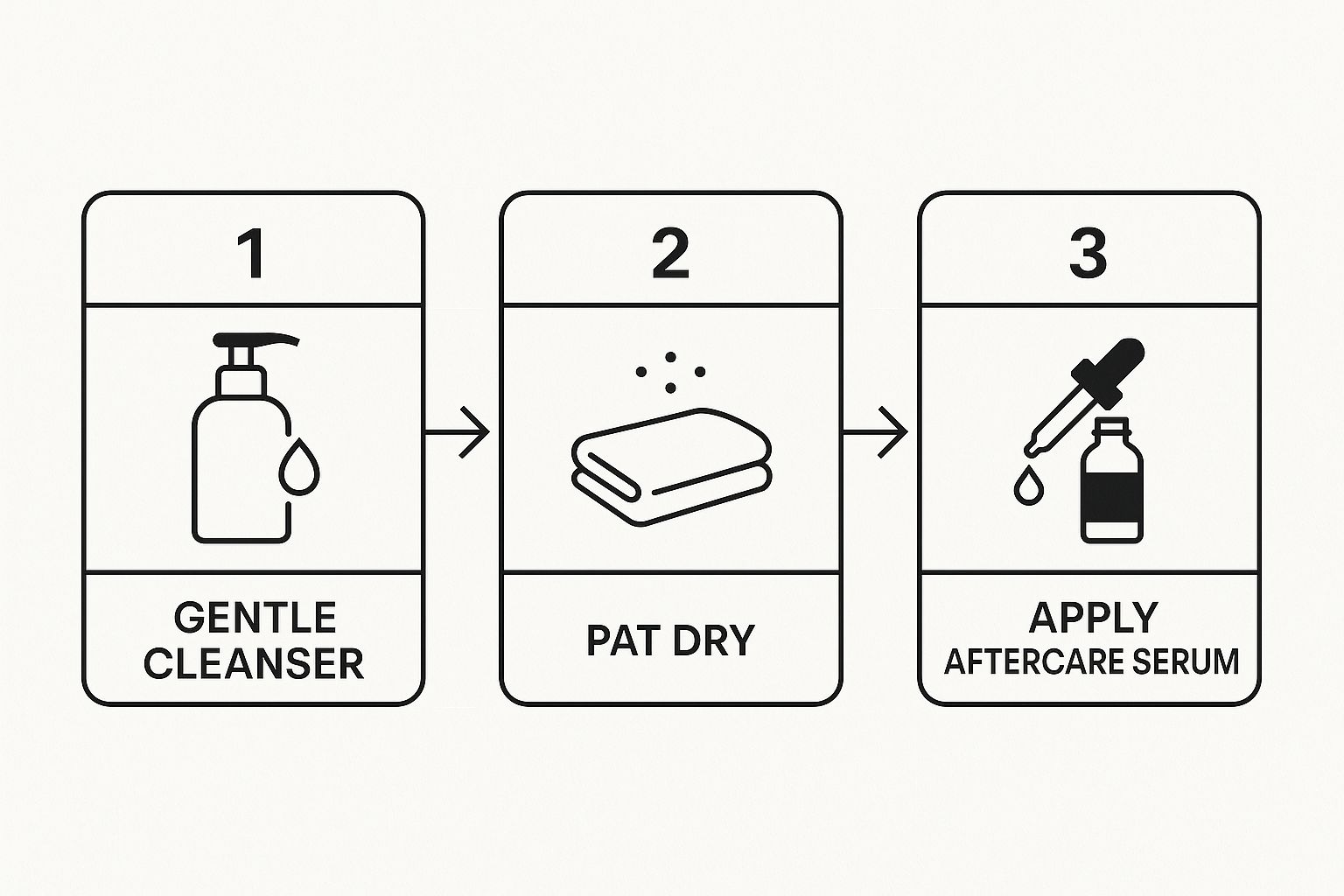
It really just reinforces that a delicate touch and the right products are non-negotiable while your skin is in this fragile state.
Hydration Inside and Out
After cleansing, gently pat your skin dry with a soft, clean towel. No rubbing! While your skin is still a little damp, smooth on a thin layer of a neutral, barrier-repairing moisturiser. I always recommend looking for products with ingredients like ceramides, hyaluronic acid, or glycerin. You’ll probably need to reapply it a few times during the day, whenever your skin starts to feel a bit tight or parched.
Honestly, doing less is doing more right now. Your skin just needs two things: moisture and protection. Piling on products will only get in the way of the healing process.
And don’t forget that hydration comes from within, too. Drinking plenty of water is brilliant for supporting your skin’s natural repair work. Here’s another pro tip: try sleeping on a clean silk or satin pillowcase for a few nights. It sounds fussy, but it genuinely reduces friction and irritation while you sleep.
To give you a quick cheat sheet for this critical time, here’s a simple table to keep you on the right track.
Immediate Aftercare Dos and Don'ts (First 48 Hours)
Action (Do) | Reason | Avoidance (Don't) | Reason |
|---|---|---|---|
Cleanse gently with a soap-free formula. | Prevents stripping natural oils and causing irritation. | Use hot water on your face. | Increases inflammation, redness, and sensitivity. |
Pat skin dry with a soft towel. | Avoids friction that can damage the fragile skin barrier. | Rub or scrub your skin. | Can cause micro-tears and hinder the healing process. |
Apply a barrier-repair moisturiser frequently. | Keeps skin hydrated and protected, reducing tightness. | Use active ingredients (retinoids, acids, Vitamin C). | These can severely irritate compromised skin. |
Drink plenty of water. | Supports the body's natural healing and skin hydration. | Expose skin to direct sun. | Fresh skin is extremely prone to sun damage and hyperpigmentation. |
Sleep on a clean silk/satin pillowcase. | Minimises friction and irritation on sensitive skin overnight. | Pick, peel, or scratch at flaking skin. | Can lead to scarring, infection, and poor results. |
Sticking to these simple guidelines for the first 48 hours will make a huge difference in your recovery, setting you up for the best possible outcome from your treatment.
Navigating the Peeling Phase
This is the part everyone asks about. The peeling phase is arguably the most anticipated—and sometimes challenging—part of the chemical peel journey. It usually kicks off around day three, and it’s the most tangible proof that your treatment is working its magic. Your skin is literally shedding its old, damaged outer layers to make way for the fresh, renewed skin underneath.
While it’s a great sign, seeing your skin flake can really test your patience. For so many people, the urge to pick, pull, or scrub at the shedding bits is almost overwhelming. You absolutely must resist.
Crucial Advice: Picking at peeling skin is the fastest way to sabotage your results. It can disrupt the delicate healing process, leading to post-inflammatory hyperpigmentation (those pesky dark spots), broken capillaries, and in the worst cases, permanent scarring. Let your skin shed on its own terms.
My best tip? Keep your hands busy and your hair tied back. A simple hairband can stop you from unconsciously brushing strands—and your fingers—away from your face. The secret to great chemical peel aftercare during this stage is simply patience and gentle support.
Supporting Your Skin Through the Shed
So, while you can't speed the peeling up, you can certainly make the process more comfortable. The main goal here is to keep that new, emerging skin hydrated and protected without actually interfering with the natural shedding. Believe it or not, over-moisturising can sometimes prolong the process by "gluing" the dead skin down.
Instead, just apply a thin layer of a neutral, barrier-supporting moisturiser when your skin feels uncomfortably tight or dry. Think soothing and hydrating, not thick and greasy.
Your Peeling Phase Allies:
Hyaluronic Acid: This is a brilliant humectant. It draws moisture into the skin, giving you that hydrated feeling without being heavy.
Ceramides: These are lipids that are a natural part of your skin barrier. They help lock in moisture and protect you from irritation.
Glycerin: Another fantastic humectant that helps your skin hold onto its own moisture.
When you apply these, use gentle patting motions. Don't forget, your skin is incredibly sensitive right now, so any rubbing or scrubbing is off the table. A light touch-up of moisturiser throughout the day is all you'll need to stay comfortable.
Managing Your Social Life While Peeling
Let's be realistic—life doesn't pause just because your face is flaking. If you've got to be at work or have a social event, it can feel a bit daunting. Planning is your best friend here. If you can, try to schedule your peel so that the heaviest peeling days (usually days 3-5) land over a weekend.
If you do have to be out and about, just own it. Honestly, most people are far less focused on your skin than you are. A simple, "I've just had a skin treatment, so please excuse the flakiness!" is more than enough to explain what's going on.
To manage how you look and feel, just focus on two key things:
Strategic Moisturising: Before you head out, apply that thin layer of moisturiser. It will help to minimise how obvious the dry flakes are.
Strict Sun Protection: This is non-negotiable. Your new skin is extremely vulnerable. A mineral-based, broad-spectrum SPF 50 is your best friend. The tinted versions are fantastic as they can help to even out your skin tone a bit without resorting to makeup, which you should avoid until the peeling has completely stopped.
Remember, this phase doesn't last long. By treating your skin gently and resisting the temptation to interfere, you're making sure you get the best possible return on your investment.
Why Sun Protection Is Non-Negotiable
Think of your fresh, newly revealed skin as a delicate seedling. Exposing it to the harsh sun is the fastest way to undo all the incredible work of your treatment. You’ve invested time and money into this, so let’s protect that investment.
UV radiation is the number one enemy of healing skin. It triggers a cascade of inflammatory responses, which can lead to prolonged redness, sensitivity, and—worst of all—post-inflammatory hyperpigmentation (PIH). These are those stubborn dark spots that can appear after any kind of skin trauma, and they are notoriously difficult to get rid of.
Choosing Your Shield: Mineral vs. Chemical Sunscreen
When it comes to sunscreen, not all formulas are created equal, especially for skin that’s in recovery mode. During this initial healing phase, your absolute best friend is a mineral (or physical) sunscreen.
Mineral sunscreens work by creating a physical barrier on the skin that literally blocks and reflects UV rays away. Their active ingredients are usually zinc oxide and titanium dioxide, both known for being exceptionally gentle and soothing on sensitive, compromised skin. Another huge plus? They offer broad-spectrum protection the very moment you apply them.
Chemical sunscreens, on the other hand, absorb UV radiation and convert it into heat, which is then released from the skin. While they're effective, the active ingredients (like oxybenzone or avobenzone) can sometimes irritate a skin barrier that's already working hard to heal. For now, it’s best to stick with the gentle, protective shield of a mineral formula.
Key Takeaway: For the first few weeks after your peel, exclusively use a broad-spectrum, mineral-based sunscreen with an SPF of 50 or higher. This gives you the most robust and gentle protection against both UVA (ageing) and UVB (burning) rays.
Your Sun Safety Timeline and Best Practices
Your vigilance against the sun needs to start the second you leave the clinic and continue for several weeks, if not months. It’s not just a "sunny day" rule; it’s an "every single day" rule, because UVA rays can penetrate clouds and even glass. You’re exposed even on overcast days or when you're just sitting by a window.
Healing times vary from a week for light peels to over 14 days for medium peels, and redness can sometimes linger even longer. This is why sustained protection is so crucial. The new skin is incredibly vulnerable to damage, so we need to give it the best possible chance to heal perfectly.
Practical Sun Protection Tips:
Apply Generously: Most people apply far too little sunscreen. For your face and neck, you should be using about half a teaspoon. Don't skimp!
Reapply Religiously: Sunscreen isn't a one-and-done deal. You need to reapply it every two hours, or more often if you've been sweating.
Don't Forget Accessories: A wide-brimmed hat and UV-protective sunglasses are your new best friends. They provide a physical shield that sunscreen alone can't match.
Reapplying over makeup can feel tricky, but there are some fantastic products out there now, like brush-on mineral powders or sunscreen mists that make it easy without messing up your look. Adopting these habits is fundamental for anyone serious about achieving and maintaining healthier skin, a topic we explore more deeply in our ultimate guide to healthier, radiant skin.
Reintroducing Your Skincare Routine

Rushing this part is a sure-fire way to trigger redness, sensitivity, and irritation, which can easily undo all the beautiful results you’ve just patiently waited for. Think of this next phase as a careful, strategic reintroduction of your favourite products to protect your investment.
Building Your Routine Back Up
The golden rule here is to go slowly. You’ll want to reintroduce products one by one, giving you a chance to see how your newly sensitised skin reacts. The first products to make a comeback should be the same gentle heroes you were using during the initial healing phase.
These are your core, hydrating staples:
Gentle Cleanser: Continue with that soap-free, non-foaming cleanser that won't strip your skin’s precious oils.
Hydrating Serum: A simple hyaluronic acid serum is a fantastic next step to give your skin a deep drink of water.
Neutral Moisturiser: Stick with the bland, barrier-repairing moisturiser you’ve been relying on.
SPF 50+ Sunscreen: This remains the non-negotiable cornerstone of your morning routine. Every single day.
Stick with this gentle routine for at least a week after all the peeling has stopped. This gives your skin barrier that extra time it needs to fortify itself before you even think about introducing more powerful ingredients.
Your skin’s tolerance has been completely reset. Even products you used for years without a problem need to be patch-tested before you apply them all over your face. Just apply a small amount to an inconspicuous area, like behind your ear, and wait 24 hours to check for any reaction.
When to Reintroduce Active Ingredients
Patience is everything when it comes to reintroducing your active ingredients. Bringing them back into the mix too soon is probably the most common mistake I see people make. Your skin is still delicate, even if it looks and feels perfectly fine on the surface. For help building a bespoke plan, you can explore more insights on our skincare blog.
Here is a general timeline for reintroducing actives after a light to medium peel:
Active Ingredient | Recommended Wait Time | Why the Wait is Important |
|---|---|---|
Vitamin C | 7-10 days post-peeling | It can be acidic and potentially irritating to a freshly healed skin barrier. |
Retinoids | At least 14 days post-peeling | These are highly potent and can easily cause redness, dryness, and irritation on new skin. |
Exfoliating Acids | At least 14 days post-peeling | Your skin has just been intensely exfoliated; adding more can lead to over-exfoliation and damage. |
Of course, this timeline is just a guide. You have to listen to your skin. If you reintroduce a product and experience any stinging, redness, or discomfort, stop using it immediately. Give your skin a few more days to recover before you even consider trying it again.
What to Do When Your Peel Goes a Little Sideways
Even when you follow your aftercare plan to the letter, your skin’s healing journey can sometimes throw you a curveball. A bit of redness and flaking is totally normal—in fact, it’s a sign the peel is working. But what about when things seem to go slightly off-script?
Knowing how to react to common concerns is the key to making sure your skin heals beautifully without any lasting drama. Sometimes you might notice stubborn redness that hangs around a bit too long, or a surprise crop of spots. This doesn’t mean you’ve done anything wrong; everyone’s skin has its own unique way of responding. Post-peel breakouts, for instance, are often just "purging," where the peel accelerates the process of bringing underlying gunk to the surface.
The real skill is learning to tell the difference between a minor hiccup and a genuine problem. This has become even more important lately. In the UK, online searches for "home chemical peels" shot up by an incredible 200% after the pandemic, as people tried to get clinic-level results in their own bathrooms. While you can understand the appeal, it also means a higher risk of complications without a professional to guide you. You can read more about these aesthetic industry trends and their implications.
Handling Minor Setbacks
For most small issues, a calm and gentle approach is all you need. If you’re dealing with redness or sensitivity that just won't quit, it's time to pull back. Simplify everything and return to the most basic routine: a gentle cleanser, a simple, soothing moisturiser packed with ingredients like ceramides, and, of course, your daily SPF 50.
Here’s how you can manage a couple of common bumps in the road:
Stubborn Redness: Soak a clean flannel in cool water and apply it as a compress for a few minutes at a time. This can work wonders to calm inflammation. Steer clear of any products with fragrance or active ingredients until it settles.
Unexpected Breakouts: Whatever you do, don't pick or squeeze. I can't stress this enough. Messing with them is a fast track to scarring and hyperpigmentation. Just stick with your gentle routine and let them run their course.
Remember, the goal here is to create a calm, healing environment for your skin. Trying to "fix" it with more products or harsh treatments will only make things worse. Patience truly is your most powerful tool right now.
When to Call Your Practitioner
While you can handle most little issues at home, there are certain red flags that mean you need to get professional advice, and fast. Don't play the waiting game. Call your practitioner immediately if you experience any of the following.
Red Flags That Need Professional Help:
Signs of Infection: This includes increasing pain, any yellow or green discharge, swelling, or skin that feels hot to the touch.
Severe or Blistering Reactions: Widespread blistering or crusting that goes far beyond what your practitioner told you to expect.
Allergic Reactions: Look out for hives, intense and unbearable itching, or swelling around your face or eyes.
Persistent Pigmentation Changes: Any new dark patches (hyperpigmentation) or light spots (hypopigmentation) that appear and don’t seem to be fading.
Think of your practitioner as your partner in this. We’ve seen it all before and can give you the right advice to get your healing back on track safely and effectively.
Your Chemical Peel Aftercare Questions Answered
Even with the most detailed instructions, it’s completely normal to have a few questions pop up during your chemical peel recovery. Let's be honest, watching your skin flake and peel can feel a little unnerving the first time around. We’ve been there, and we’ve heard it all from our clients.
So, we’ve put together some straight-talking answers to the most common queries we get. Think of this as your go-to guide for those "is this normal?" or "when can I...?" moments. Getting these details right is what protects your investment and ensures you get that gorgeous, healthy glow you’re after.
When Can I Wear Makeup After a Chemical Peel?
This is, without a doubt, the question we get asked most often. The golden rule is simple: wait until all the active peeling and flaking has completely finished. For most light to medium peels, that puts you at around the 5 to 7-day mark.
Trying to apply makeup before your skin is ready is a bad idea for a couple of reasons. First, that brand-new skin is incredibly delicate, and the pigments and chemicals in your foundation can easily cause irritation or a setback in your healing. Second, makeup brushes and sponges can be a breeding ground for bacteria, and the last thing you want is to introduce that to your vulnerable skin, which could trigger breakouts or even an infection.
When you do finally get the all-clear, reach for a mineral-based makeup. It’s known for being gentler on sensitive skin. And please, always start with freshly cleaned brushes or a new sponge—hygiene is non-negotiable here.
Pro Tip: A fantastic stand-in while you wait is a tinted mineral sunscreen. It gives you that non-negotiable SPF protection while offering a subtle tint to even out skin tone and tone down any lingering redness. It's the perfect compromise.
Can I Exercise After My Chemical Peel?
It’s best to press pause on your gym membership for a few days. We strongly recommend avoiding any strenuous exercise, saunas, steam rooms, or hot yoga for at least 48 to 72 hours post-peel. Basically, anything that makes you sweat heavily is off the table.
Why? Sweat is salty, and that salt will sting and seriously irritate your compromised skin barrier. On top of that, the heat and increased blood flow from a tough workout can ramp up inflammation and redness, slowing down your recovery.
A gentle walk is absolutely fine and won't cause any problems. But hold off on that spin class or HIIT session until you get the green light from your practitioner. Your skin will tell you when it’s ready—if it feels tight or uncomfortable, give it more time.
How Does Aftercare Differ for Light vs Deep Peels?
This is a crucial point. While the core principles of aftercare—gentle cleansing, hydrating, and sun protection—are universal, the intensity and duration of that care change massively depending on how deep the peel was.
A light, "lunchtime" peel has a pretty quick and easy recovery. You might have some mild dryness or flaking for a few days, but you can usually slip back into your regular skincare routine within a week or so.
Deep peels are another story entirely. They are a serious clinical procedure, and the recovery is far more involved and lengthy, often taking several weeks. The aftercare is intensive and will likely include prescribed ointments, multiple follow-up appointments, and incredibly strict sun avoidance for months to prevent serious risks like scarring or permanent pigmentation changes. For these, you must follow the bespoke protocol given to you by your practitioner to the letter.
At Charis Aesthetics, we believe that empowering you with the right knowledge is the key to achieving and maintaining your best-ever skin. If you're ready to see how a professional chemical peel can transform your complexion, we'd love to chat. We invite you to book a consultation with us today. Find out more about our personalised, science-backed treatments at https://www.charis-aesthetics.co.uk.
Comments