
Bio-Spicule Therapy in Rossendale
A needle-free resurfacing treatment using microscopic marine sponge spicules to open micro-channels in the skin, driving a controlled renewal over the following week.
In short
Bio-spicule therapy works microscopic silica spicules into the skin to open thousands of micro-channels and drive a controlled renewal; the skin usually peels from day three to day six, so leave a clear week either side of anything important.
- How long it lasts
- a course holds for several months with maintenance
- When you see it
- after the peel finishes, around day 7 to 10
- Downtime
- tingling for 24 to 48 hours, then visible peeling days 3 to 6
- Does it hurt
- not painful during; a pronounced prickling that evening
- Sessions
- 3 to 4, four weeks apart
Bio-spicule therapy uses microscopic silica spicules harvested from freshwater sponge, worked into the skin to create thousands of tiny channels in the surface. It is a resurfacing treatment rather than an injectable, and it is one of the more intense things on the menu — the visible part of it happens over the days after your appointment rather than on the day.
How it works
The spicules are needle-shaped mineral structures, invisible to the eye, that sit in a serum base. Massaged into the skin they penetrate the outer layer and create a dense field of micro-channels. Two things follow: the skin mounts a repair response, and anything applied afterwards reaches a depth it otherwise could not.
It is closest in spirit to microneedling, but the mechanism is mechanical and distributed rather than a series of controlled punctures, and it reaches a more superficial depth across a wider surface.
It is used for texture, congestion, dullness, the flattening of shallow scarring, and skin that has stopped responding to a good home routine. It is not a treatment for lines caused by movement or for lost volume.

A closer look
Three questions before a newer treatment
Which product?
Ask for the exact product, ingredients and route of use.
What evidence?
Ask what human studies support this use and what remains uncertain.
What review?
Agree realistic expectations and how progress will be assessed.
A decision checklist. It does not imply proven effectiveness or regulatory approval.
What the week afterwards looks like
This is the part to plan around. The skin is flushed and warm on the day, tightens over the next 24 to 48 hours, and then usually peels — sometimes quite visibly — from around day three to day six. Tingling and prickling in the first day or two is normal and is the spicules themselves.
Some people experience a purge: congestion that was sitting below the surface comes up before it clears. It is a normal part of the process rather than a reaction, but it is a reason not to book this two days before an event.
I would leave a clear week either side of anything you care about looking well for. If that is not possible, say so at consultation and we will choose something else or move the date.
You will be given written aftercare before you leave, and a direct number to reach me on if anything concerns you afterwards. Reviews are offered at two weeks so we can assess the result together and adjust if needed.
Course and combining it
A course of three to four treatments spaced four weeks apart is typical, with maintenance every few months once the skin is where you want it. Some people have a single treatment for a specific reason and that is a legitimate use of it.
It combines well with a good topical routine and, sequenced properly, with peels and microneedling — but not in the same fortnight. Tell me everything you are having done and I will build the order so the skin is not being resurfaced by three different things at once.
Every treatment begins with a full-face assessment and an honest conversation. If I do not think a treatment is clinically indicated or right for you, I will say so and explain why — including when the answer is to do nothing.
What the whole course involves, start to finish
| Stage | What happens | When |
|---|---|---|
| Assessment | Skin type, history, current products, and what has been tried. Depth and intensity are set from this | Before the first session |
| Session | The treatment itself | 20–45 minutes |
| Straight afterwards | Redness and tightness, like moderate sun exposure | 0–24 hours |
| Shedding | Flaking or peeling, depending on depth. How much you shed is not how well it worked | Day 2–7 |
| The glow, then the gap | Skin looks better for a few days, then appears to stop changing | Week 1–4 |
| The actual result | Collagen remodelling becomes visible: texture, tone, softened scarring | From 4 weeks, building to 12 |
| Next session | Spaced so the previous round has finished remodelling | 4–6 weeks apart |
The stretch between the glow fading and the collagen result appearing is the part people find hardest, because nothing appears to be happening. That is the remodelling phase, and it is the treatment working.
How the plan is decided
Depth is chosen for the area and the skin, not for the appointment
The skin over the forehead and around the eyes is markedly thinner than the skin of the cheek, so treating the whole face at one setting either under-treats one or over-treats the other. A practitioner adjusting as they work across the face is doing the job properly.
Deeper is not better. Past the point that triggers a repair response, extra depth buys downtime and risk rather than collagen.
Skin tone changes the plan, and should be raised before you ask
Post-inflammatory pigmentation — healing darker than the surrounding skin — is meaningfully more likely in richer skin tones. That is a reason for priming the skin, a gentler depth and staged treatment, not a reason to avoid resurfacing. A practitioner who does not raise it before treating deeper skin is not assessing the risk that matters most.
What you do between sessions decides most of the outcome
Daily sun protection and a consistent routine matter more to the final result than any single appointment. Freshly resurfaced skin is temporarily far more reactive to ultraviolet light, and a course without daily protection is money spent undoing itself.
Often suits
- Rough or uneven skin texture
- Congestion and blocked pores
- Dull skin that has stopped responding to home care
- Shallow scarring and post-acne marking
Not suitable if
- Active acne, eczema, rosacea or any inflamed skin condition
- A compromised or very reactive skin barrier
- Anyone pregnant or breastfeeding
- Anyone under 18
- Anyone who cannot avoid sun exposure for the fortnight afterwards
Sources and further reading
- NHS — Dermal fillers
- British Association of Dermatologists — patient information
- Joint Council for Cosmetic Practitioners
- Aesthetic Complications Expert Group
This page is general information, not personal medical advice. Every treatment needs an individual assessment, and what is right for someone else may not be right for you.
Results
Bio-Spicule Therapy — Ashleigh’s patients
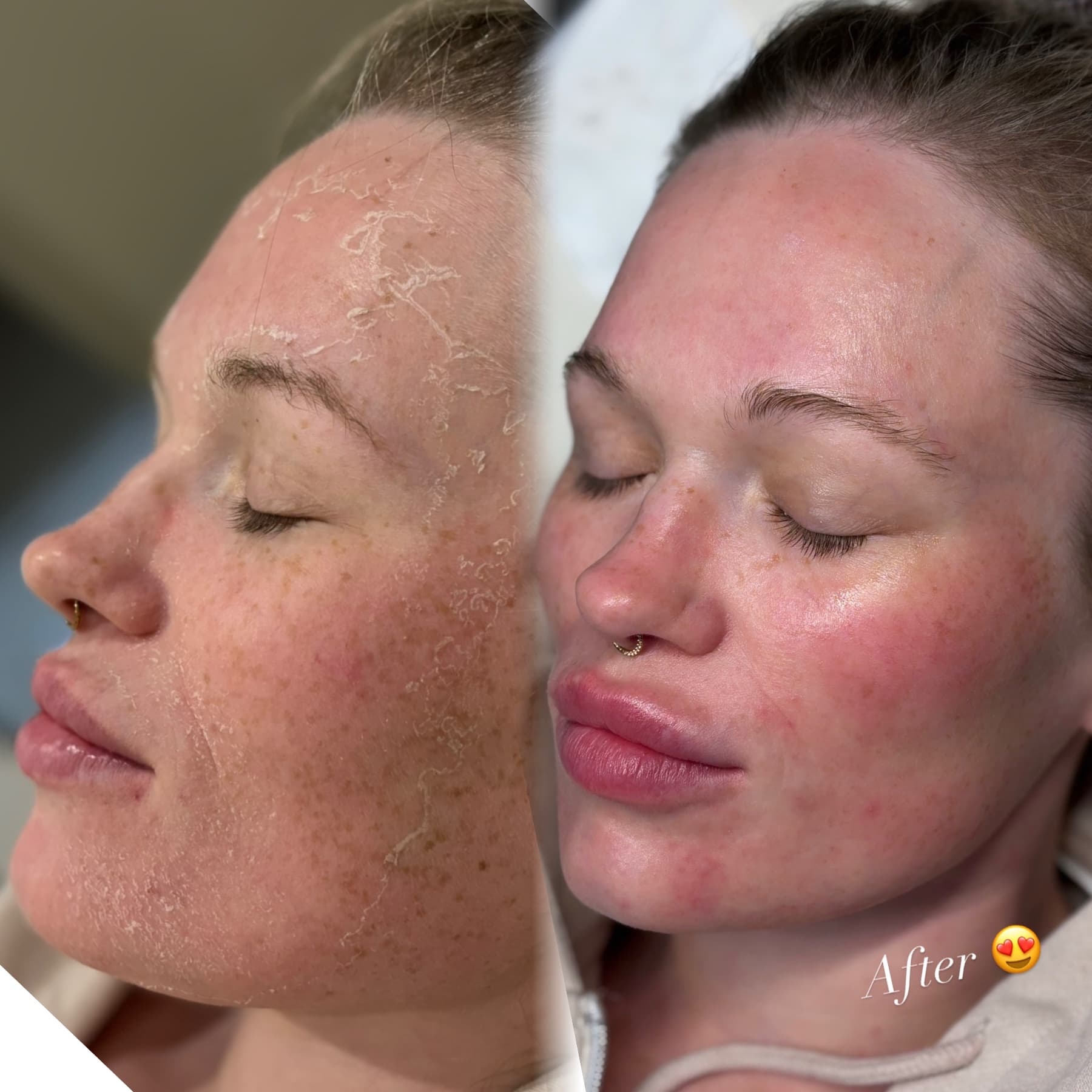
Individual results vary. Shared with patient consent.
Common questions
Bio-Spicule Therapy — what people ask
- Does it hurt?
- It is not painful during the appointment — most people describe a warm prickling that builds over the first hour. The tingling can be quite pronounced that evening and settles overnight.
- Will I definitely peel?
- Most people do, usually from day three. How much varies with your skin and how many treatments you have had. Peeling is not the measure of whether it worked, but with this treatment it is common enough to plan for.
- How is it different from microneedling?
- Microneedling makes controlled punctures at a set depth with a device. Bio-spicule therapy works mechanically across the whole surface at a shallower depth, and it produces a much more visible shedding phase. They suit different skin and they are often used in sequence rather than chosen between.
- Can I have it if my skin is sensitive?
- Possibly not, and that is an assessment question. Reactive skin, rosacea, active eczema or a compromised barrier are all reasons to choose something gentler, and I would rather say so than treat and cause a flare.
- Is bio-spicule therapy safe?
- Yes, with proper assessment, and less so without it. The real risks are pigmentation change in darker skin types, infection if the skin is not looked after afterwards, and scarring if a treatment goes deeper than the skin can tolerate. All three are decisions made before the treatment starts rather than accidents that happen during it, which is why one protocol for everybody is the thing to be wary of.
- Can I have bio-spicule therapy while pregnant or breastfeeding?
- It depends on the treatment. Microneedling is not offered during pregnancy. Superficial treatment is often fine, but pregnancy changes how skin behaves and pigments, so it is a conversation rather than a yes or no — tell me at booking and we will work out what is sensible.
Travelling to Charis
The clinic is in Stacksteads, Bacup, with patients travelling in for bio-spicule therapy from Rawtenstall, Haslingden, Ramsbottom, Burnley, Rochdale, Bury, Accrington and across the Rossendale valley.
Areas we coverYou may also be looking at
Controlled micro-injury that prompts the skin to remodel — used for texture, scarring, pore size and overall quality.
A resurfacing treatment that accelerates cell turnover — used for pigmentation, congestion, texture and dullness.
A thorough facial: double cleanse, exfoliation, dermaplaning where your skin needs it, then a soothing moisturiser finished with SPF 50.
Get in touch
Book a consultation
Consultations are £30, and that comes off the cost of your treatment if you go ahead. No pressure to book anything on the day — if you are not sure whether you want treatment at all, that is still a good reason to come and talk.