
PRP & PRF Facial in Rossendale
Your own platelet-rich plasma, used to prompt skin repair. Sometimes called a vampire or liquid gold facial.
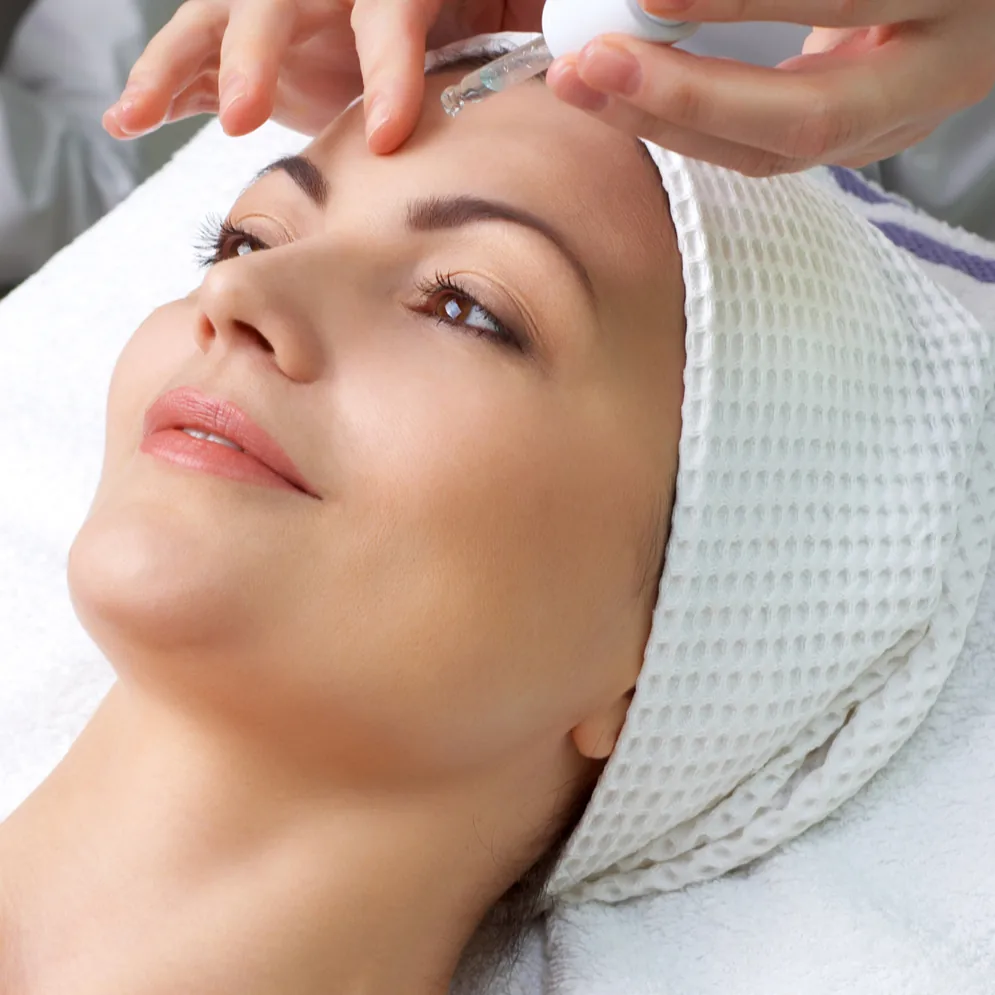
In short
A PRP facial uses platelets concentrated from your own blood to prompt the skin's repair response, usually as a course of four sessions four weeks apart, with change appearing gradually over two to three months.
- How long it lasts
- 6 to 12 months, with maintenance
- When you see it
- gradually from 4 weeks, clearest at 2 to 3 months
- Downtime
- redness for a day; bruising possible, especially under the eyes
- Does it hurt
- a blood draw, then mild stinging
- Sessions
- a course of 4, four weeks apart
PRP uses your own blood. A small sample is taken, spun in a centrifuge to concentrate the platelets and growth factors, and then reintroduced into the skin. Because the material is entirely yours, there is no question of compatibility or of introducing a foreign product — which is why it appeals to people who want rejuvenation without anything synthetic.
PRP and PRF
PRF (platelet-rich fibrin) is prepared differently — spun more slowly and without anticoagulant — producing a fibrin matrix that releases growth factors more gradually. Which one suits you depends on the concern and the area, and I will explain the choice at consultation rather than defaulting to one.
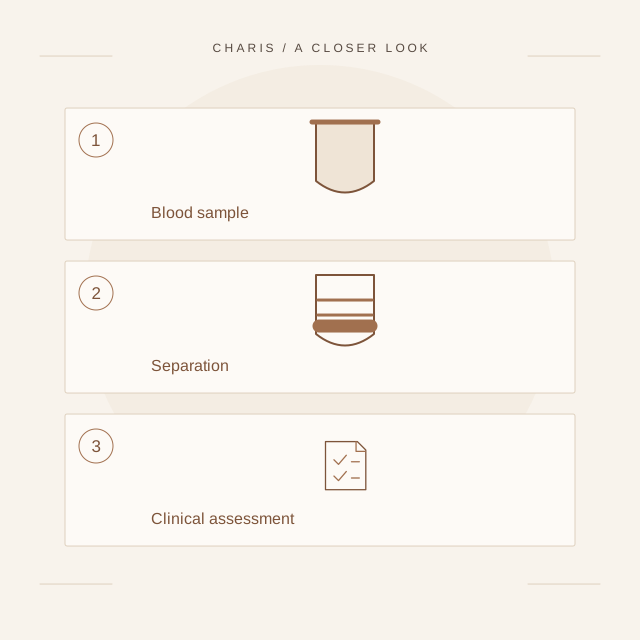
A closer look
From a blood sample to a clinical plan
Sample
PRP starts with a sample of your own blood.
Preparation
The sample is processed to separate a platelet-rich preparation.
Clinical use
Preparation and suitability depend on the procedure. Using your own blood does not make a treatment risk-free.
A process overview, not preparation instructions or a prediction of benefit.
Course and results
Three sessions spaced four to six weeks apart is typical, with maintenance annually. Results are gradual — this treatment improves skin quality over months rather than producing an immediate change.
You will be given written aftercare before you leave, and a direct number to reach me on if anything concerns you afterwards. Reviews are offered at two weeks so we can assess the result together and adjust if needed.
Why a nurse matters here
PRP involves venepuncture, sterile handling of a blood product and safe disposal. As a critical care nurse this is routine daily practice for me rather than an add-on skill, and the infection-control standards are the ones I was trained to in the NHS.
What the whole course involves, start to finish
| Stage | What happens | When |
|---|---|---|
| Assessment | Your skin is assessed for what it actually lacks — hydration, density, or repair capacity. These need different products | Before the first session |
| Session 1 | A series of small injections at fixed points, around 20 minutes | Day 0 |
| Straight afterwards | Small raised bumps at each point, settling within hours to a day. Little else to see | 0–24 hours |
| The gap | Nothing visible. This is the phase people mistake for the treatment not working | 2–4 weeks |
| The rest of the course | Sessions 2 and 3, sometimes 4, at the interval that product calls for | Weeks 2–12 |
| The result | Firmness, hydration and texture — judged here, not before | 8–12 weeks after the final session |
| Maintenance | A single top-up session rather than a repeat course | 6–9 months |
How the plan is decided
What your skin is short of decides the product
The question at assessment is not which brand you have heard of. It is whether your skin is dehydrated, whether it has genuinely thinned and lost density, or whether its repair machinery needs supporting — because those three want different things, and a product chosen for the first will underperform on the third.
Skin that is reasonably thick but dull and flat generally does well with hydration and firmness. Skin that is crepey and fragile, showing fine lines at rest, usually needs building blocks or a repair signal instead.
Why a course, and why the spacing is not padding
One session produces a signal; a course produces a sustained one, and sustained signalling is what actually changes tissue. The intervals are set by how long the previous session keeps working — treating again before that has finished spends a session on skin that was already busy.
What this category cannot do
None of it changes the shape of your face. If what bothers you is lost volume, a flat midface or a heavy jowl, the honest answer is that you are looking at the wrong category — and a clinic offering a skin treatment for a structural problem is selling rather than assessing.
Sources and further reading
- NHS — Dermal fillers
- British Association of Dermatologists — patient information
- Joint Council for Cosmetic Practitioners
- Aesthetic Complications Expert Group
This page is general information, not personal medical advice. Every treatment needs an individual assessment, and what is right for someone else may not be right for you.
Results
PRP & PRF Facial — Ashleigh’s patients
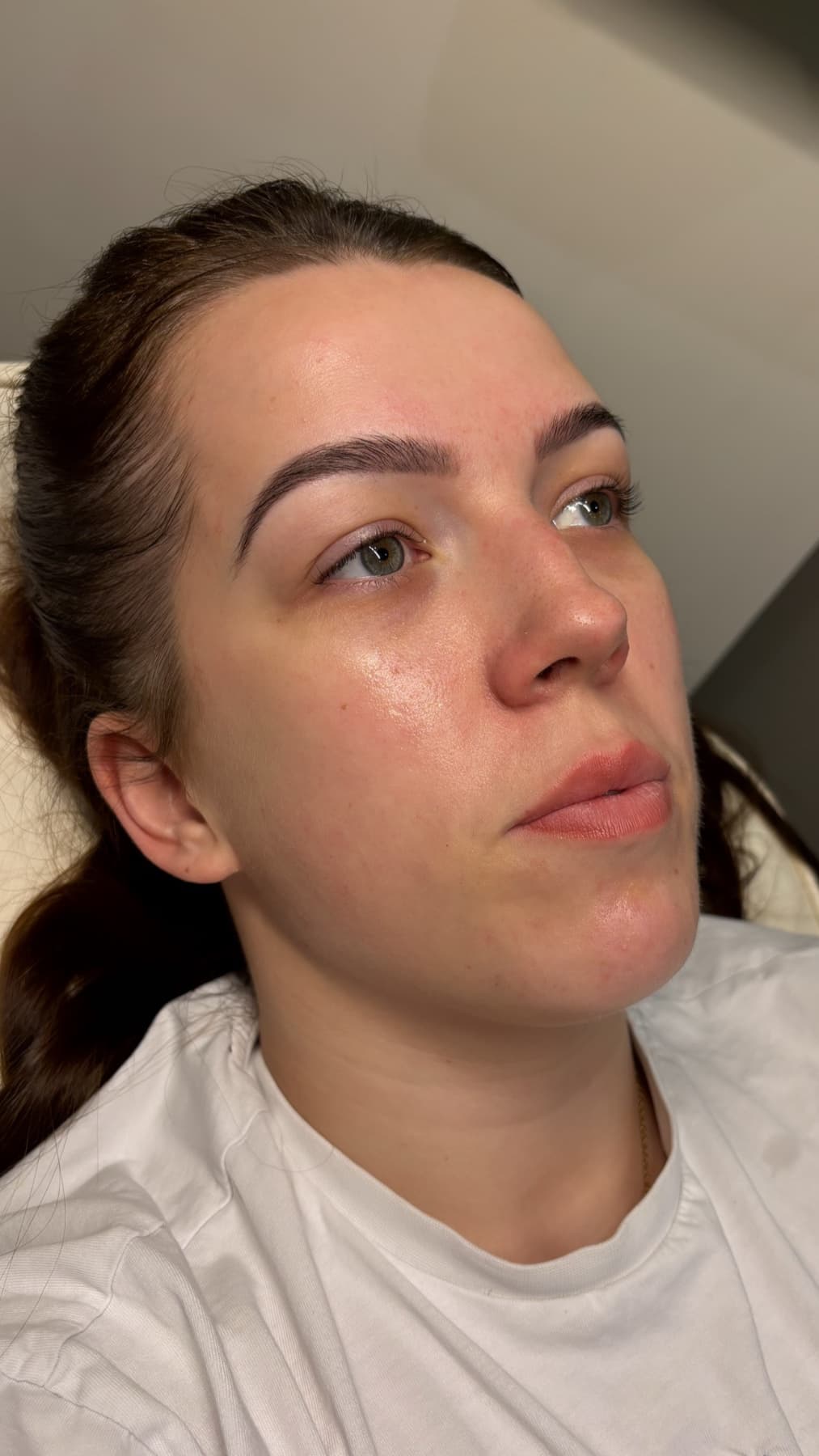
Individual results vary. Shared with patient consent.
Common questions
PRP & PRF Facial — what people ask
- Is it painful?
- A blood sample is taken as it would be for any blood test. Topical numbing is applied before the injections. Most people find it very manageable.
- Is it safe?
- The material is your own, which removes any question of allergy or rejection. The risks that remain are the ones common to any injectable — bruising, swelling and, rarely, infection — which is why sterile technique matters.
- How is this different from a skin booster?
- A skin booster introduces a manufactured product. PRP introduces a concentrate of your own platelets. They can achieve overlapping results by different routes, and they are sometimes combined.
- Is a PRP facial safe?
- The risks are mostly the ordinary ones of any injection — bruising, swelling, small bumps at the injection points, and rarely infection. The products are highly purified and the reaction rate is low. Under the eyes is the area with the most bruising and the least margin for error, which is a reason to ask how often your practitioner treats it.
- Can I have a PRP facial while pregnant or breastfeeding?
- No. Injectable treatment is not offered during pregnancy or breastfeeding, on the same precautionary basis as everything else injectable here.
Travelling to Charis
The clinic is in Stacksteads, Bacup, with patients travelling in for prp & prf facial from Rawtenstall, Haslingden, Ramsbottom, Burnley, Rochdale, Bury, Accrington and across the Rossendale valley.
Areas we coverYou may also be looking at
Platelet-rich plasma injected into the scalp to support follicle health in early-stage thinning.
Regenerative injectable treatment that works on skin quality — hydration, elasticity and firmness — rather than adding volume.
Controlled micro-injury that prompts the skin to remodel — used for texture, scarring, pore size and overall quality.
Get in touch
Book a consultation
Consultations are £30, and that comes off the cost of your treatment if you go ahead. No pressure to book anything on the day — if you are not sure whether you want treatment at all, that is still a good reason to come and talk.