
Chemical Peels aftercare
The skin barrier is temporarily compromised, so sun protection is not an optional extra — it is part of the treatment working.
Ring rather than wait if you have
- Blistering or severe pain
- Darkening of the treated area — early treatment of post-inflammatory pigmentation matters
- Spreading redness, swelling that worsens after day two, or discharge
- Fever or feeling generally unwell
- A cold sore developing in or near the treated area
Call 07721 823933. I would far rather see you and find nothing than have you wait it out overnight. If you cannot reach me and you are worried, contact NHS 111 or attend your nearest emergency department.
Specific to chemical peels
If you were treating pigmentation, sun protection afterwards is what decides whether this worked. Unprotected exposure now can leave you worse off than before.
01The first 24 hours
- Expect redness and warmth similar to mild sunburn, with some tightness.
- Use only a bland cleanser and a simple moisturiser. Nothing active.
- No make-up until the skin surface is intact, usually 24–48 hours.
02The first week
- Flaking or a sandpapery texture often appears around day three. Do not pick, pull or exfoliate it away.
- Whether you visibly peel is not a measure of whether it worked.
- Reintroduce active ingredients gradually from about day five to seven, retinoids last.
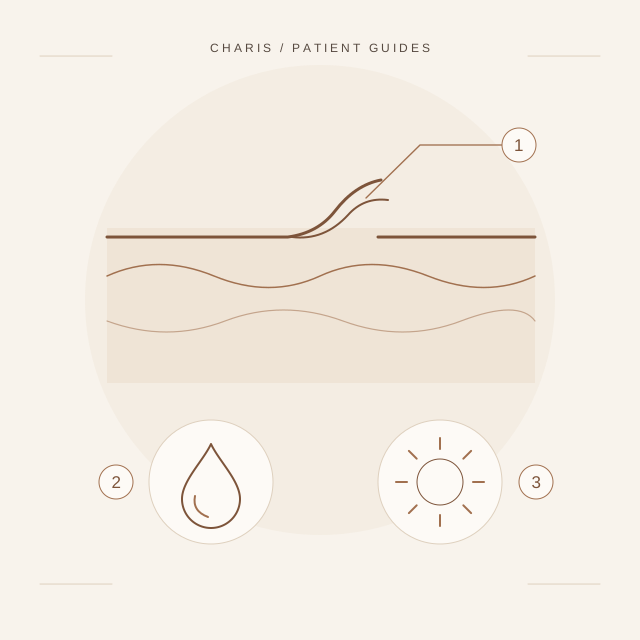
A closer look
Protect the surface while it heals
Let flakes detach naturally
Picking or rubbing recovering skin can cause injury. Visible peeling is not a measure of success.
Keep care simple
Use the moisturiser or ointment advised for your peel. Restart active ingredients only as directed.
Protect from sunlight
Avoid direct sun during healing. Follow your clinician’s advice on when to apply sunscreen to recovering skin.
Superficial peeling is illustrated; deeper peels have different recovery needs. Follow your own written aftercare plan.
Why these rules exist
The reasoning, not just the instruction
Why sun protection matters more here than anywhere else
Freshly resurfaced skin has lost some of its barrier and is temporarily far more reactive to ultraviolet light. Sun exposure in the first weeks is the main route to post-inflammatory pigmentation — a patch darker than the surrounding skin, which is the opposite of what you paid for and can take months to fade.
It is the least popular sentence in aesthetics and one of the truest: a resurfacing course without daily sun protection is money spent undoing itself.
Why not to pick, whatever it looks like
Flaking skin is loose because the layer beneath is not yet ready to be exposed. Pulling it away early takes living tissue with it, and that is how a treatment with no scarring risk acquires one.
Let it come away on its own, keep it moisturised, and it will take days rather than weeks.
Why the real result is a month away
The redness settling is not the result — it is the inflammation phase ending. The improvement you came for is collagen remodelling, which begins underneath in the following days and becomes visible from around four weeks, continuing for three months.
This is why a course is spaced four to six weeks apart. Treating again before the previous round has finished remodelling wastes the session.
03What to avoid, and for how long
| Picking or exfoliating flaking skin | until it has finished |
|---|---|
| Active skincare — acids, retinoids, vitamin C | 5–7 days |
| Strenuous exercise, saunas and hot showers | 48 hours |
| Sun exposure without SPF 50 | at least 2 weeks |
| Sunbeds | 4 weeks |
04What to expect, and when
Day 1–2
Redness settles.
Day 3–6
Flaking, where it happens.
Week 2
Skin settled, results emerging.
Week 4
Next session, if you are having a course.
Common questions
- How long does swelling last after a chemical peel?
- Day 1–2: Redness settles. Day 3–6: Flaking, where it happens. Week 2: Skin settled, results emerging. Week 4: Next session, if you are having a course.
- When can I wear make-up after a chemical peel?
- Once the skin surface is intact and any injection points have closed — usually within 24 hours. Use clean brushes or clean hands.
- When should I ring rather than wait?
- Blistering or severe pain; Darkening of the treated area — early treatment of post-inflammatory pigmentation matters; Spreading redness, swelling that worsens after day two, or discharge; Fever or feeling generally unwell; A cold sore developing in or near the treated area.
- How long does a chemical peel take to settle?
- Redness settles within a day or two after a light treatment and up to a week after a deeper one. The improvement you actually came for — texture, scarring, tone — appears from around four weeks and continues developing for three months.
- Does a chemical peel hurt?
- Numbing cream is applied first and the sensation is usually described as heat and prickling rather than pain. A deeper treatment is more uncomfortable than a light one. You can ask to stop at any point and that is not a problem.
- How often should I have a chemical peel?
- Every four to six weeks during a course, because that is roughly how long the skin takes to complete a round of remodelling, then maintenance every few months. Treating again before the previous round has finished wastes the session.
- What should I not do after a chemical peel?
- No picking or pulling at flaking skin, no exfoliating acids or retinoids for a week, no heat, sauna or heavy exercise for 48 hours, and no sun on the treated skin without high-factor protection. Picking is the one that causes lasting marks.
- Is it normal for skin to look worse after a chemical peel?
- Briefly, yes, and it is worth knowing beforehand. Skin can look darker, tighter or flaky for a few days before it improves, and a deeper peel looks worse for longer. What is not normal is blistering, spreading redness, or pain that increases rather than settles — ring about any of those rather than waiting.
This is general aftercare information. You will be given written aftercare specific to your treatment before you leave, and a direct number to reach me on. If anything here conflicts with what you were told in clinic, what you were told in clinic applies.
Sources and further reading
- NHS — Dermal fillers
- British Association of Dermatologists — patient information
- Joint Council for Cosmetic Practitioners
- Aesthetic Complications Expert Group
This is general aftercare information, not personal medical advice. What you were told in clinic takes precedence over anything on this page.
Get in touch
Book a consultation
Consultations are £30, and that comes off the cost of your treatment if you go ahead. No pressure to book anything on the day — if you are not sure whether you want treatment at all, that is still a good reason to come and talk.