How does fat dissolving injections work?
Fat dissolving injections break down small, stubborn pockets of fat that do not respond to diet or exercise; it takes two to four sessions six weeks apart, and it is not a weight-loss treatment.
- When you see it
- from 4 to 6 weeks after each session
- How it feels
- stinging during, then a deep ache and tenderness for a few days
- Sessions
- 2 to 4, six weeks apart
What fat dissolving injections actually are
A solution injected directly into a small, defined pocket of fat, which disrupts the membrane of the fat cells it contacts. Those cells break down, their contents are released, and the body clears the debris through the lymphatic system and the liver over the following weeks.
The important word is small. This is a treatment for a discrete pocket that has not responded to diet and exercise — under the chin is the classic site — and not a treatment for a body area or a general weight concern.
Because it works by destroying cells and then waiting for clearance, the reaction is deliberately inflammatory. Significant swelling for several days is the treatment working, not a complication, and anyone booking it without being told that will have an unpleasant surprise.
How the process runs
Injections are placed in a grid across the pocket, at a depth that reaches the fat and stays clear of the structures around it. The area swells within hours, is often firm and tender for several days, and settles over two to three weeks.
A course is normal — typically two to four sessions spaced six to eight weeks apart, because each session addresses a proportion of the fat present and the tissue needs time to clear and settle between them. The result builds session by session and is assessed at the end rather than in the middle.
The cells that are destroyed do not come back. That is often sold as permanence, and it is true as far as it goes: the remaining cells in the area can still enlarge if weight increases, so the result is durable rather than immune to what happens next.
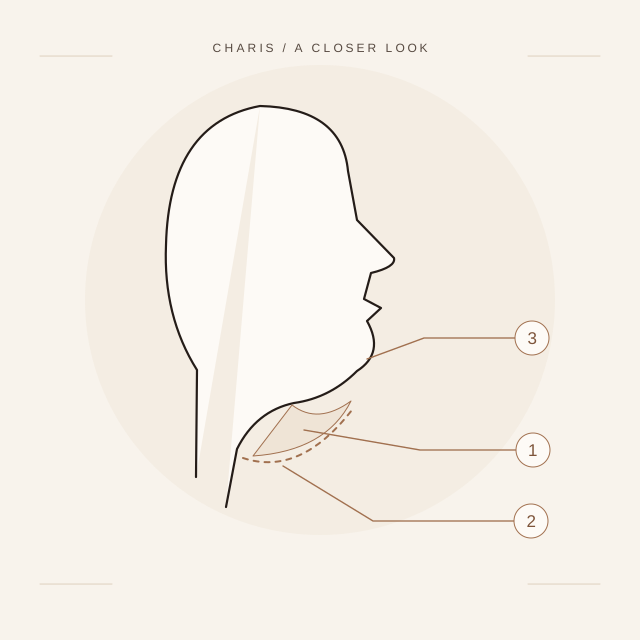
A closer look
Three contributors to the under-chin contour
Submental tissue
Fullness under the chin can include fat.
Skin
Loose skin changes the outline independently of the amount of fat.
Chin shape
The position and projection of the chin affect how the neck meets the face.
Conceptual landmarks, not a diagnostic test. These factors may coexist and call for different approaches.
Do they actually work
For a small, discrete, pinchable pocket of fat in someone at a stable weight, yes, over a course, with a realistic expectation of reduction rather than removal.
For a general area, for someone whose weight is moving, or where the appearance is caused by loose skin or by bone and muscle rather than fat, no — and that is an assessment question rather than a product question.
The commonest reason people say it did not work is that they were treated for the wrong problem.
What it cannot do
It is not weight loss and it will not act like it. Treating a pocket of fat in someone whose real concern is body weight produces disappointment at the cost of several uncomfortable weeks.
It cannot tighten skin. If laxity is contributing to the appearance — which under a chin it very often is — removing the fat beneath can make loose skin more obvious rather than less. That has to be assessed honestly before booking, and it is a common reason to say no.
And it does not address a heavy jawline caused by bone, muscle or descent rather than by fat. Establishing which of those you actually have is the whole point of the assessment.
Sources and further reading
- NHS — Dermal fillers
- British Association of Dermatologists — patient information
- Joint Council for Cosmetic Practitioners
- Aesthetic Complications Expert Group
This page is general information, not personal medical advice. Every treatment needs an individual assessment, and what is right for someone else may not be right for you.
Common questions
- What is fat dissolving injections?
- Fat dissolving injections break down small, stubborn pockets of fat that do not respond to diet or exercise; it takes two to four sessions six weeks apart, and it is not a weight-loss treatment.
- How does fat dissolving injections work?
- Injections are placed in a grid across the pocket, at a depth that reaches the fat and stays clear of the structures around it. The area swells within hours, is often firm and tender for several days, and settles over two to three weeks.
- How long does fat dissolving injections take to work?
- From 4 to 6 weeks after each session. Judging it before then is judging an incomplete result.
- Does fat dissolving injections hurt?
- stinging during, then a deep ache and tenderness for a few days You are told what to expect before anything starts, and you can stop at any point.
- What can fat dissolving injections not do?
- It is not weight loss and it will not act like it. Treating a pocket of fat in someone whose real concern is body weight produces disappointment at the cost of several uncomfortable weeks.
Get in touch
Book a consultation
Consultations are £30, and that comes off the cost of your treatment if you go ahead. No pressure to book anything on the day — if you are not sure whether you want treatment at all, that is still a good reason to come and talk.