
Skip to content
Charis Aesthetics

Dermaplaning in Rossendale

Physical exfoliation that removes dead surface skin and vellus hair, leaving a smoother surface and better product absorption.
Written and clinically reviewed by Ashleigh Trickett, Registered Nurse & Aesthetic PractitionerNMC 22A2789ELast reviewed
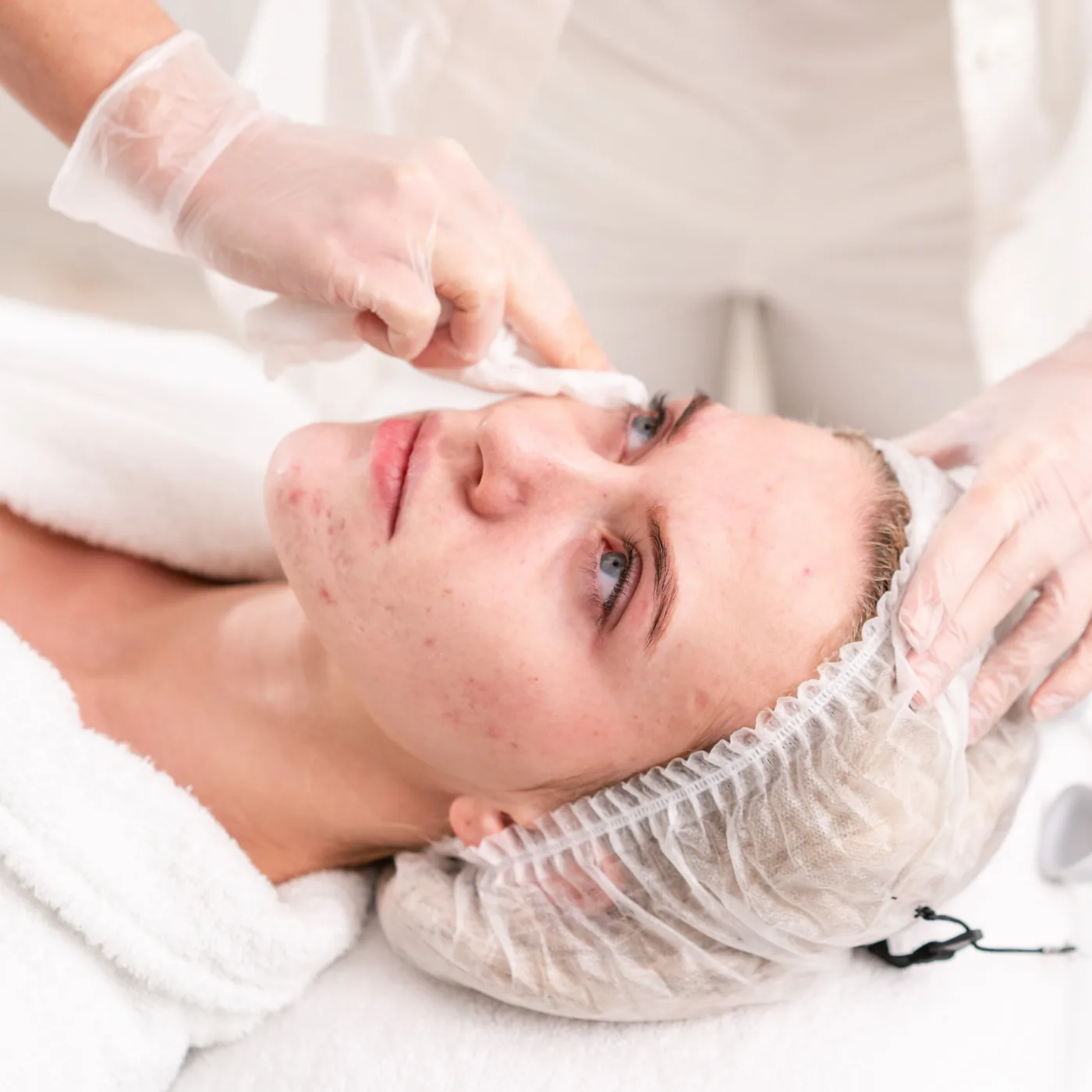
Dermaplaning being performed at Charis Aesthetics

In short

Dermaplaning uses a sterile blade to remove dead surface skin and vellus hair, leaving skin visibly smoother the same day; the effect lasts three to four weeks and it does not make hair grow back thicker or darker.

How long it lasts
3 to 4 weeks
When you see it
immediately
Downtime
none — mild redness for an hour or two
Does it hurt
none; it feels like a light scraping
Sessions
one, repeated every 4 to 6 weeks if you like it

Dermaplaning uses a sterile blade to remove the outermost layer of dead skin cells along with the fine vellus hair on the face. The result is an immediately smoother surface, better absorption of anything applied afterwards, and a noticeably cleaner make-up finish. It is offered here as an add-on to another treatment.

What to expect

It is not painful and there is no downtime. Skin is more sensitive to UV immediately afterwards, so sun protection matters for the following few days.

The hair grows back exactly as it was — the persistent claim that it returns thicker or darker is not true; vellus hair does not become terminal hair because it has been cut.

Skin cross-section with a fine outer layer lifting away from the surface and intact tissue beneath.

A closer look

Surface care has limits

  1. Outer surface

    Exfoliating treatments act on the surface to different degrees.

  2. Treatment choice

    The method and intensity depend on the skin and the treatment being discussed.

  3. Recovery

    A gentler routine and the written aftercare plan help protect recovering skin.

A conceptual surface diagram, not a shared mechanism or depth for every exfoliating treatment.

What the whole course involves, start to finish

The visible recovery and the actual result happen at completely different times, which is the thing worth knowing before you book.
StageWhat happensWhen
AssessmentSkin type, history, current products, and what has been tried. Depth and intensity are set from thisBefore the first session
SessionThe treatment itself20–45 minutes
Straight afterwardsRedness and tightness, like moderate sun exposure0–24 hours
SheddingFlaking or peeling, depending on depth. How much you shed is not how well it workedDay 2–7
The glow, then the gapSkin looks better for a few days, then appears to stop changingWeek 1–4
The actual resultCollagen remodelling becomes visible: texture, tone, softened scarringFrom 4 weeks, building to 12
Next sessionSpaced so the previous round has finished remodelling4–6 weeks apart

The stretch between the glow fading and the collagen result appearing is the part people find hardest, because nothing appears to be happening. That is the remodelling phase, and it is the treatment working.

How the plan is decided

Depth is chosen for the area and the skin, not for the appointment

The skin over the forehead and around the eyes is markedly thinner than the skin of the cheek, so treating the whole face at one setting either under-treats one or over-treats the other. A practitioner adjusting as they work across the face is doing the job properly.

Deeper is not better. Past the point that triggers a repair response, extra depth buys downtime and risk rather than collagen.

Skin tone changes the plan, and should be raised before you ask

Post-inflammatory pigmentation — healing darker than the surrounding skin — is meaningfully more likely in richer skin tones. That is a reason for priming the skin, a gentler depth and staged treatment, not a reason to avoid resurfacing. A practitioner who does not raise it before treating deeper skin is not assessing the risk that matters most.

What you do between sessions decides most of the outcome

Daily sun protection and a consistent routine matter more to the final result than any single appointment. Freshly resurfaced skin is temporarily far more reactive to ultraviolet light, and a course without daily protection is money spent undoing itself.

Sources and further reading

This page is general information, not personal medical advice. Every treatment needs an individual assessment, and what is right for someone else may not be right for you.

Common questions

Dermaplaning — what people ask

Will the hair grow back thicker?
No. Cutting vellus hair does not change its thickness or colour. It regrows exactly as it was.
Can I have it on its own?
It is offered as an add-on to another treatment rather than as a standalone appointment.
Is dermaplaning safe?
Yes, with proper assessment, and less so without it. The real risks are pigmentation change in darker skin types, infection if the skin is not looked after afterwards, and scarring if a treatment goes deeper than the skin can tolerate. All three are decisions made before the treatment starts rather than accidents that happen during it, which is why one protocol for everybody is the thing to be wary of.
Is dermaplaning bad for your skin?
No, when it is done properly on skin suited to it. It removes dead cells and fine hair without injuring living tissue, which is why there is no downtime. It is not suitable during active acne or on inflamed skin, where a blade over a raised lesion can spread bacteria and worsen things — which is the main reason it is worth having done by someone looking at your skin rather than doing it yourself.
Can you do dermaplaning at home?
You can buy the tools, and people do. What you cannot easily reproduce is the technique: the blade angle, the tension held on the skin and the direction of each stroke are the whole thing, and the consequence of getting them wrong is a cut on your face or a patch of irritation that takes a fortnight. A single-blade facial razor is not the same instrument and is not held the same way. There is also a judgement about whether your skin should be dermaplaned at all — active acne, inflamed or broken skin, certain conditions — which is made by someone looking at your face rather than by a video.
Is dermaplaning good for your skin?
For most skin, yes, in a modest and immediate way: smoother texture, a brighter surface, easier make-up application, and better penetration of whatever you put on afterwards. What it does not do is stimulate collagen or change anything structural, and any claim that it does is overselling a genuinely useful treatment.
Can I have dermaplaning while pregnant or breastfeeding?
It depends on the treatment. Microneedling is not offered during pregnancy. Superficial treatment is often fine, but pregnancy changes how skin behaves and pigments, so it is a conversation rather than a yes or no — tell me at booking and we will work out what is sensible.

Travelling to Charis

The clinic is in Stacksteads, Bacup, with patients travelling in for dermaplaning from Rawtenstall, Haslingden, Ramsbottom, Burnley, Rochdale, Bury, Accrington and across the Rossendale valley.

Areas we cover

You may also be looking at

Get in touch

Book a consultation

Consultations are £30, and that comes off the cost of your treatment if you go ahead. No pressure to book anything on the day — if you are not sure whether you want treatment at all, that is still a good reason to come and talk.