How does dermaplaning work?
Dermaplaning uses a sterile blade to remove dead surface skin and vellus hair, leaving skin visibly smoother the same day; the effect lasts three to four weeks and it does not make hair grow back thicker or darker.
- When you see it
- immediately
- How it feels
- none; it feels like a light scraping
- Sessions
- one, repeated every 4 to 6 weeks if you like it
What resurfacing actually is
Controlled, deliberate injury — or in one case, controlled removal. The whole category works by provoking the skin's own repair response, and the skill is entirely in the control: enough to trigger repair, not enough to cause damage the skin does not fully recover from.
Microneedling makes hundreds of tiny vertical channels through the epidermis into the dermis. A chemical peel applies an acid at a concentration that separates and lifts a measured depth of skin. Dermaplaning is different in kind — it removes the outermost dead layer and the fine vellus hair with a blade, without injuring living tissue, which is why it has no downtime and no collagen effect worth claiming.
The depth reached is the entire variable. It decides what a treatment can improve, how long you are red for, and how much risk you are taking. A deeper treatment is not a better treatment; it is a different treatment with a different recovery, and matching depth to the problem is most of the job.
Scroll the table sideways →
| Treatment | Depth reached | What it improves | Visible recovery |
|---|---|---|---|
| Dermaplaning | Dead surface layer only — no injury | Texture, brightness, product absorption | None |
| Superficial peel | Within the epidermis | Tone, brightness, congestion | 1-3 days, light flaking at most |
| Microneedling | Into the dermis, depth chosen per area | Texture, acne scarring, pores, fine lines | 24-48 hours of redness |
| Medium peel | Upper dermis | Established pigmentation, fine lines, some scarring | About a week of visible peeling |
How the repair response works
The moment the skin registers injury it starts a sequence that has been the same for as long as we have had skin. First inflammation — the redness and heat in the hours afterwards, which is the response working rather than a side effect. Then proliferation, over the following days, as fibroblasts migrate in and lay down new collagen. Then remodelling, over weeks to months, as that new collagen is reorganised into something stronger and better aligned than what was there.
The remodelling phase is why the result of a resurfacing treatment is not the result you see when the redness settles. Real improvement in texture and scarring appears from around four weeks and continues for three months. Judging it at day seven is judging inflammation.
It is also why a course beats a single session for anything structural. Each treatment restarts the cascade; the improvements accumulate. One session gives you a glow, which is a real but temporary consequence of increased blood flow and a freshly cleared surface.
A closer look
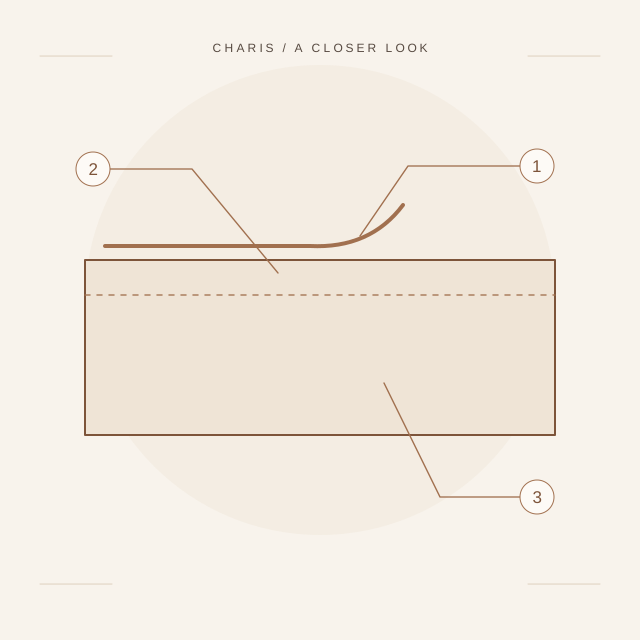
Surface care has limits
Outer surface
Exfoliating treatments act on the surface to different degrees.
Treatment choice
The method and intensity depend on the skin and the treatment being discussed.
Recovery
A gentler routine and the written aftercare plan help protect recovering skin.
A conceptual surface diagram, not a shared mechanism or depth for every exfoliating treatment.
What dermaplaning actually does — and the myth attached to it
A sterile blade held at an angle removes the outermost layer of dead cells and the fine vellus hair. It is not an injury and there is no wound-healing response, which is why there is no downtime and no collagen claim to make.
What it genuinely does is leave the skin noticeably smoother, brighter and easier to apply makeup to, and it lets serums and actives penetrate a surface that is no longer covered by dead cells and fine hair. Those are real, immediate and modest.
The myth is that the hair grows back thicker or darker. It does not. Vellus hair has a fixed growth pattern and comes back exactly as it was — the blunt cut end can feel different for a few days, which is where the belief comes from.
Why it is not a home treatment
The blade, the angle and the tension on the skin are the whole technique, and the consequence of getting them wrong is a cut on your face. A single-blade razor is not the same instrument and is not held the same way.
There is also a judgement about who should not have it — active acne, inflamed skin, certain skin conditions — which is a decision made by someone looking at your skin rather than by a video.
What it cannot do
It cannot change the shape of anything. Resurfacing improves the surface and the quality of the skin; volume, structure and descent are untouched by it.
It cannot fix pigmentation caused by ongoing sun exposure or by an underlying condition, and in darker skin types an over-aggressive treatment can cause pigmentation rather than clear it. That risk is real, it is assessed beforehand, and it is a reason to be wary of a clinic that offers one protocol to everybody.
And it cannot outrun what you do afterwards. A resurfacing course without daily sun protection is money spent undoing itself, which is the least popular sentence in aesthetics and one of the truest.
Sources and further reading
- NHS — Dermal fillers
- British Association of Dermatologists — patient information
- Joint Council for Cosmetic Practitioners
- Aesthetic Complications Expert Group
This page is general information, not personal medical advice. Every treatment needs an individual assessment, and what is right for someone else may not be right for you.
Common questions
- What is dermaplaning?
- Dermaplaning uses a sterile blade to remove dead surface skin and vellus hair, leaving skin visibly smoother the same day; the effect lasts three to four weeks and it does not make hair grow back thicker or darker.
- How does dermaplaning work?
- The moment the skin registers injury it starts a sequence that has been the same for as long as we have had skin. First inflammation — the redness and heat in the hours afterwards, which is the response working rather than a side effect. Then proliferation, over the following days, as fibroblasts migrate in and lay down new collagen. Then remodelling, over weeks to months, as that new collagen is reorganised into something stronger and better aligned than what was there.
- How long does dermaplaning take to work?
- Immediately. Judging it before then is judging an incomplete result.
- Does dermaplaning hurt?
- none; it feels like a light scraping You are told what to expect before anything starts, and you can stop at any point.
- What can dermaplaning not do?
- It cannot change the shape of anything. Resurfacing improves the surface and the quality of the skin; volume, structure and descent are untouched by it.
Get in touch
Book a consultation
Consultations are £30, and that comes off the cost of your treatment if you go ahead. No pressure to book anything on the day — if you are not sure whether you want treatment at all, that is still a good reason to come and talk.