Skin changes during menopause
Prepare for a conversation about skin changes during menopause: your current routine, concerns, treatment expectations and when to seek medical advice.
Charis Aesthetics · Consultation planning guide · Published . This guide has not been clinically reviewed by Ashleigh.
Menopause can coincide with changes in skin dryness, texture and firmness. That does not mean there is one aesthetic treatment everyone needs. Start by separating the concerns you want help with and discussing them in the right setting: a skin consultation can explore cosmetic goals, while medical symptoms and menopause treatment need your healthcare professional.
Bring your routine, not just a treatment request
Write down your cleanser, moisturiser, sun protection and any active skincare products, including how often you use them. Note what has changed, what feels uncomfortable and whether anything makes it worse. Bring information about previous procedures and reactions as well.
The American Academy of Dermatology advises gentle cleansing, moisturising and sun protection when discussing menopausal skin. Persistent problems or a changing skin lesion need professional assessment. Do not assume every new skin change is simply part of menopause.
Choose one main concern to discuss first
Dryness, pigmentation, surface texture and changes in facial volume are different questions. Explain which matters most to you and what would count as a worthwhile improvement. That helps keep the consultation focused and avoids choosing several treatments before understanding their purpose.
Ask what can be improved, what cannot, and whether a simpler skincare approach should come before a procedure. A cosmetic plan is optional. It should fit your priorities rather than make normal ageing feel like a problem that must be corrected.
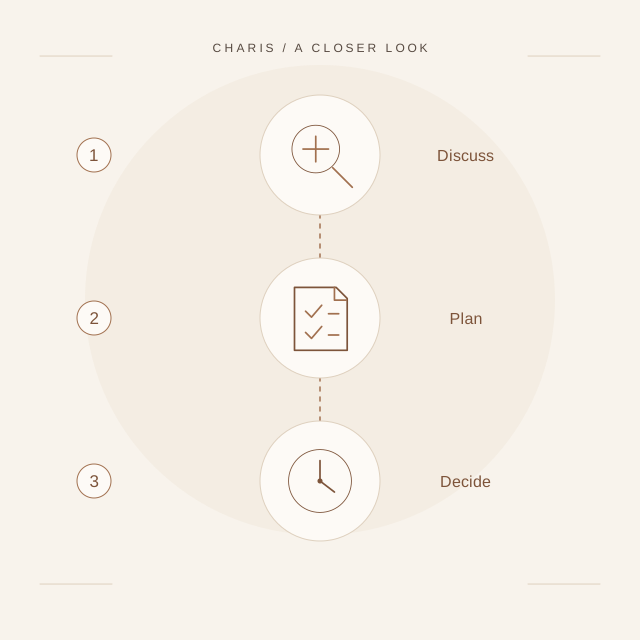
A closer look
A plan starts with a conversation
Discuss and assess
Talk through your concerns, medical history and previous treatment.
Understand the plan
Discuss options, limits, risks and costs, including doing nothing.
Take time
Ask questions and decide whether you want to proceed.
The sequence describes the consultation approach. It does not mean treatment is appropriate or will happen on the same day.
Questions before considering a procedure
- Why does this option fit the concern we have discussed?
- What will it not change?
- What are the preparation and recovery requirements for my skin?
- How many appointments are anticipated and what is the total cost?
- When would you recommend waiting or seeking advice elsewhere?
The Charis skin-booster, facial and microneedling pages explain options available for discussion. They are not a menopause treatment programme and do not establish your suitability. Ask for an assessment before booking a procedure or course.
Keep medical care and cosmetic goals clear
Charis is an aesthetic clinic. Advice about hormone treatment or other medical symptoms should come from an appropriately qualified healthcare professional. Tell your treating practitioner about medicines and health changes so they can decide whether an aesthetic appointment should proceed.
If you are travelling to the clinic, start with an enquiry describing what you want to discuss. Confirm which appointment is appropriate before planning a sequence of visits.
Sources and further reading
This page is general information, not personal medical advice. Every treatment needs an individual assessment, and what is right for someone else may not be right for you.
Treatments this relates to
- Skin BoostersFrom £200
The category explained — what a skin booster is, how the options differ, and how to work out which one you actually need.
- Facial£59
A thorough facial: double cleanse, exfoliation, dermaplaning where your skin needs it, then a soothing moisturiser finished with SPF 50.
- MicroneedlingFrom £150
Controlled micro-injury that prompts the skin to remodel — used for texture, scarring, pore size and overall quality.
Read next
Skin
Improving skin texture
Roughness, visible pores and an uneven surface — what causes them, what genuinely improves them, and what no treatment can change.
Skin
Treating pigmentation on the face
Sun damage, post-inflammatory marks and melasma look similar and are treated differently — how to tell them apart, what actually works, and what makes each of them worse.
Facial harmonisation
Hollow cheeks: why they happen, and what actually fills them
Cheeks lose fat before the rest of the face does. What causes hollowing, which treatments genuinely restore it, and the one mistake that makes a hollow face look heavier rather than fuller.
Get in touch
Book a consultation
Consultations are £30, and that comes off the cost of your treatment if you go ahead. No pressure to book anything on the day — if you are not sure whether you want treatment at all, that is still a good reason to come and talk.