
Sunekos vs bio-remodelling
Amino acids versus hyaluronic acid — what each supplies, which skin each suits, and why the choice is clinical rather than a preference.
Both improve skin quality without adding volume, both get called skin boosters, and both are marketed with near-identical language. The difference is in what they supply to the skin and therefore in which skin they suit — and it is a real difference rather than a branding one.
What bio-remodelling supplies
Stabilised hyaluronic acid, at high concentration, formulated to spread through the tissue rather than hold its shape in one place. It hydrates from within and firms, and over a short course it supports the skin's own collagen and elastin production.
The protocol is short — typically two sessions four weeks apart — which is part of its appeal. It is efficient, and for the right skin the change in bounce and glow is substantial.
What Sunekos supplies
Hyaluronic acid plus a patented blend of six amino acids — the raw materials from which the skin builds collagen and elastin. The intention is not simply to hydrate but to give the skin the components to rebuild its extracellular matrix, the structural scaffolding that holds it firm.
The protocol is longer: usually four sessions spaced one to two weeks apart, with results continuing to develop after the course. It asks more of you in appointments and time.
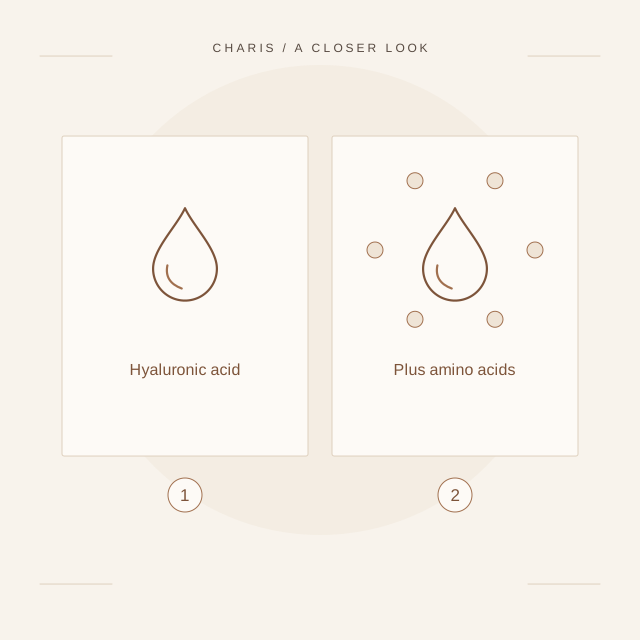
A closer look
One ingredient category, different formulations
Hyaluronic acid
Both categories discussed in this guide contain hyaluronic acid.
Amino acids
Sunekos also contains an amino-acid blend. The ingredients and formulation distinguish the products.
A clinical choice
Ingredients alone do not tell you which option is appropriate for your skin.
A formulation comparison, not a promise of a biological effect or a treatment result.
Which skin suits which
If your skin is dull and lacks bounce but is reasonably thick and undamaged, bio-remodelling is usually the more efficient choice — fewer appointments, quick visible improvement in hydration and firmness.
If your skin has genuinely thinned and lost density — crepey, fragile, showing fine lines at rest rather than on movement — an amino-acid-based option generally does more, because the problem is a lack of structure rather than a lack of water.
Around the eyes, where skin is thinnest, the amino-acid options and polynucleotides both tend to outperform bio-remodelling for the same reason: a spreading hyaluronic acid has less to work with in very thin tissue.
Where polynucleotides fit
Worth mentioning because they are constantly compared with both. Polynucleotides work differently again — they support the skin's own repair machinery rather than supplying either water or building blocks.
In practice the three overlap considerably and are often used in sequence rather than chosen between. Someone with thin, sun-damaged skin might have polynucleotides to improve repair, then bio-remodelling to maintain hydration.
A note on the brand names
Profhilo is the best-known bio-remodelling product but it is not the only one. We use Teoxane BabyGLOW for that role here, chosen on evidence, safety profile, manufacturing standards and how it behaves in the tissue rather than on name recognition.
If you specifically want Profhilo, say so at consultation and we will talk it through honestly — including where I think another product would serve you better, and where I think it would not matter.
How the choice is actually made
By looking at your skin, pinching it, and assessing how it behaves — not from a menu. The questions are: is this skin dehydrated or is it thin? Is the problem quality across a broad area or density in a specific one? What has been tried, and how did it respond?
That is a genuine clinical decision, and it is a reasonable use of a consultation even if you leave without booking anything.
What each supplies, in one view
| Bio-remodelling | Amino-acid based | |
|---|---|---|
| What it supplies | Water, held in the dermis, plus a stimulatory effect | Hyaluronic acid plus six amino acids — the raw materials for collagen and elastin |
| The problem it answers | Skin that is dehydrated and has lost bounce | Skin that has genuinely thinned and lost density |
| How to tell it is you | Reasonably thick skin, dull, lacking glow | Crepey and fragile; fine lines visible at rest |
| Course | 2 sessions, 4 weeks apart | 4 sessions, 1–2 weeks apart |
| What it asks of you | Efficient — part of the appeal | More appointments, more time, results still building afterwards |
| Around the eyes | Less suited — thin tissue gives it little to work with | Better suited, alongside polynucleotides |
In practice the two overlap and are often sequenced rather than chosen between — which is a consultation question, not a menu one.
Sources and further reading
This page is general information, not personal medical advice. Every treatment needs an individual assessment, and what is right for someone else may not be right for you.

About the author
Ashleigh Trickett
Registered Nurse & Aesthetic Practitioner
Registered Nurse with a BSc in Nursing and a PGCert in Critical Care (Manchester Metropolitan University, 2025). Ten years in the NHS, four of them in critical care. Advanced facial anatomy education at the Royal College of Surgeons with BAMAN, June 2026. Member of BAMAN and the Aesthetic Complications Expert Group. BAMAN Awards 2026 finalist for Rising Star of the Year.
Treatments this relates to
- Sunekos£200
An amino acid and hyaluronic acid injectable that supports the skin's extracellular matrix — used where skin has lost density.
- Teoxane BabyGLOW£295
A skin booster that improves hydration, elasticity and firmness across larger areas — face, neck and hands — without adding volume.
- Skin BoostersFrom £200
The category explained — what a skin booster is, how the options differ, and how to work out which one you actually need.
Common questions
- Which is better, Sunekos or bio-remodelling?
- Neither is universally better. Bio-remodelling suits dull, lax but reasonably thick skin and needs fewer sessions. Amino-acid options suit skin that has thinned and lost density, especially around the eyes, and need a longer course.
- Can I have both?
- Yes, and it is common — usually in sequence rather than at the same appointment.
- How many sessions does each need?
- Bio-remodelling is typically two, four weeks apart. Sunekos is typically four, one to two weeks apart. Both need maintenance.
- Which is better around the eyes?
- Generally the amino-acid options or polynucleotides, because the skin there is thin and needs structure rather than a spreading hydrator.
- Do you use Profhilo?
- We use Teoxane BabyGLOW for bio-remodelling, chosen on its evidence and behaviour in the tissue. Ask at consultation and I will explain the comparison honestly.
Read next
Regenerative & skin quality
Polynucleotides vs bio-remodelling
Both are injected across the face rather than into one spot, and both improve skin quality — but they work by different mechanisms and suit different skin. How to tell which one you are being offered and why.
Regenerative & skin quality
Skin booster or filler — which do you need?
One changes the quality of the skin, the other changes the shape of the face. They are not alternatives, and picking the wrong one is the most common reason a treatment disappoints.
Regenerative & skin quality
What are polynucleotides?
Purified DNA fragments used to support the skin's own repair processes — where they come from, what the evidence supports, and who they suit.
Get in touch
Book a consultation
Consultations are £30, and that comes off the cost of your treatment if you go ahead. No pressure to book anything on the day — if you are not sure whether you want treatment at all, that is still a good reason to come and talk.