
Chemical peel aftercare and recovery
What to expect day by day, what to use, and the one mistake that undoes the treatment.
How you look after your skin after a peel affects the result as much as the peel itself. This covers the full recovery, whichever depth you have had — the principles are the same, the timescales differ.
The first 48 hours
Expect tightness, redness and warmth, similar to mild sunburn. Cleanse gently with lukewarm water and a bland cleanser, use a simple moisturiser, and leave everything else out of your routine.
Stop retinoids, acids, vitamin C and any exfoliant. Do not use anything described as brightening or resurfacing. Do not have a hot shower, a sauna or a workout that makes you sweat heavily.
Days three to seven
Flaking or peeling usually begins around day three and can last several days. Whether you peel visibly is not a measure of whether it worked — plenty of effective peels shed very little.
Do not pick, pull or help the skin off. This is the mistake that causes post-inflammatory pigmentation and, occasionally, scarring — and it is by far the most common way a good peel turns into a bad outcome.
Sun protection is part of the treatment
Broad-spectrum SPF 50 every day, reapplied, for at least two weeks and ideally as a permanent habit. Freshly resurfaced skin is highly vulnerable to UV, and this matters most if you were treating pigmentation — unprotected sun exposure afterwards can leave you worse off than before.
If you are not willing to be disciplined about SPF, a peel for pigmentation is not a good use of your money and I will tell you that at consultation.
When to call
Blistering, severe pain, spreading redness, discharge, or any sign of infection. Also call if darkening appears in the treated area — early intervention on post-inflammatory pigmentation makes a real difference.
What your skin will actually do, day by day
How much you visibly peel depends on the depth used, and it is worth knowing which you had, because the recoveries are not comparable.
Scroll the table sideways →
| Depth | Days 1-2 | Days 3-5 | Typical healing time |
|---|---|---|---|
| Superficial | Slight redness, tightness | Light flaking, sometimes none at all | 1-7 days; scaling may last longer |
| Medium | Redness, noticeable tightness, skin darkening slightly | Visible peeling and shedding | 7-14 days; redness may last longer |
Why picking is the one that leaves a mark
Flaking skin is loose because the layer beneath it is not yet ready to be exposed. Pulling it away early takes living tissue with it, and that is how a treatment with essentially no scarring risk acquires one.
It is also the hardest instruction to follow, because peeling skin is physically satisfying to remove and it looks untidy for a few days. Keep it moisturised — well-hydrated skin sheds faster and looks less obviously mid-peel — and it will be gone in days rather than weeks.
And why actives have to wait
Retinoids and exfoliating acids applied to skin that is still recovering are not speeding anything up; they are a second injury layered on the first. A week off after a superficial peel, longer after a medium one, and reintroduce one product at a time rather than the whole routine at once.
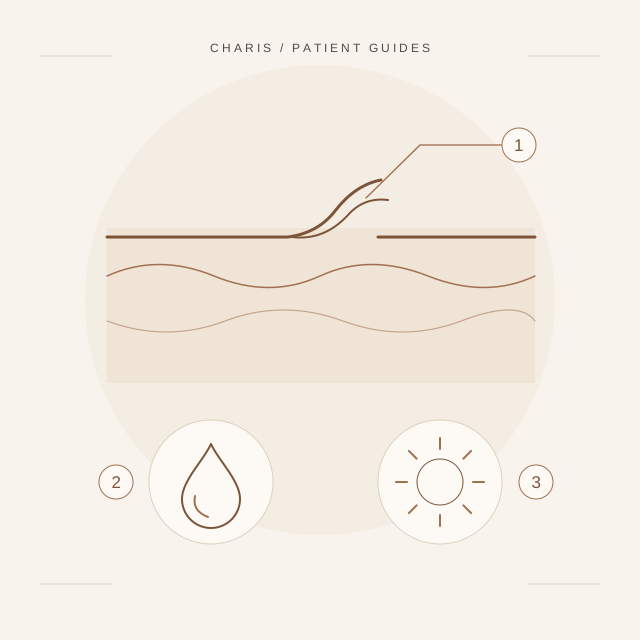
A closer look
Protect the surface while it heals
Let flakes detach naturally
Picking or rubbing recovering skin can cause injury. Visible peeling is not a measure of success.
Keep care simple
Use the moisturiser or ointment advised for your peel. Restart active ingredients only as directed.
Protect from sunlight
Avoid direct sun during healing. Follow your clinician’s advice on when to apply sunscreen to recovering skin.
Superficial peeling is illustrated; deeper peels have different recovery needs. Follow your own written aftercare plan.
Pigmentation risk, and who carries more of it
The complication worth understanding before you book is post-inflammatory hyperpigmentation — a patch that heals darker than the skin around it. It is not a burn and it is not permanent, but it can take several months to fade, which is a long time to live with the opposite of what you paid for.
It is meaningfully more likely in richer skin tones, and that is a reason for a considered plan rather than a reason to avoid peels. Priming the skin beforehand, choosing a gentler depth, and being genuinely strict about sun exposure afterwards all reduce it. A practitioner who does not raise this before treating deeper skin is not assessing the risk that matters most.
Sources and further reading
This page is general information, not personal medical advice. Every treatment needs an individual assessment, and what is right for someone else may not be right for you.

About the author
Ashleigh Trickett
Registered Nurse & Aesthetic Practitioner
Registered Nurse with a BSc in Nursing and a PGCert in Critical Care (Manchester Metropolitan University, 2025). Ten years in the NHS, four of them in critical care. Advanced facial anatomy education at the Royal College of Surgeons with BAMAN, June 2026. Member of BAMAN and the Aesthetic Complications Expert Group. BAMAN Awards 2026 finalist for Rising Star of the Year.
Treatments this relates to
- Chemical Peels£80
A resurfacing treatment that accelerates cell turnover — used for pigmentation, congestion, texture and dullness.
- MicroneedlingFrom £150
Controlled micro-injury that prompts the skin to remodel — used for texture, scarring, pore size and overall quality.
Common questions
- When can I wear make-up?
- Usually after 24 to 48 hours for a superficial peel, longer for deeper ones. Wait until the skin is intact.
- My skin did not peel — did it work?
- Very likely yes. Visible shedding depends on the peel and your skin, and it is not the measure of effect.
- How long until I can have another?
- Typically four to six weeks in a course. Doing them too close together irritates the skin without adding benefit.
Read next
Skin
Treating pigmentation on the face
Sun damage, post-inflammatory marks and melasma look similar and are treated differently — how to tell them apart, what actually works, and what makes each of them worse.
Skin
Improving skin texture
Roughness, visible pores and an uneven surface — what causes them, what genuinely improves them, and what no treatment can change.
Skin
Melasma: what it is and how it is managed
A chronic, hormonally driven pigmentation condition — managed rather than cured, and very easily made worse by the wrong treatment.
Skin
Why skin looks dull, and what actually helps
Dullness is a light problem before it is a skin problem. What causes it, what fixes it quickly, and what fixes it properly.
Skin
Microneedling aftercare and recovery
Day by day, what to use and what to leave alone — and why sun protection is part of the treatment.
Get in touch
Book a consultation
Consultations are £30, and that comes off the cost of your treatment if you go ahead. No pressure to book anything on the day — if you are not sure whether you want treatment at all, that is still a good reason to come and talk.