
Why skin looks dull, and what actually helps
Dullness is a light problem before it is a skin problem. What causes it, what fixes it quickly, and what fixes it properly.
Dullness is one of the vaguest complaints people bring to a consultation and one of the most fixable. Skin looks dull when its surface is uneven enough to scatter light rather than reflect it evenly. Almost everything that causes that is addressable, and some of it is addressable within a week.
What dullness actually is
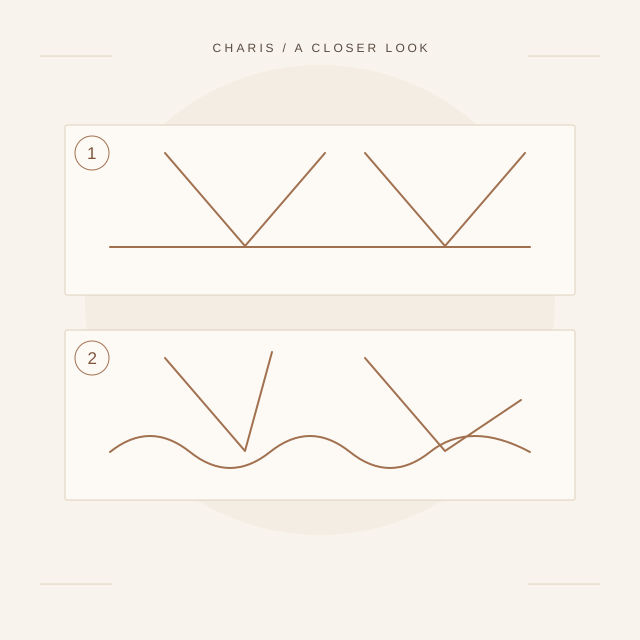
Healthy skin has a relatively smooth, well-hydrated surface that bounces light back in a fairly uniform way — which is what we read as glow. When the surface becomes rough, flaky or dehydrated, light scatters in all directions instead, and the eye reads that as flat, grey, tired.
This is why a good moisturiser appears to work instantly. It has not repaired anything in a few minutes; it has temporarily smoothed the surface so light behaves better. Understanding that distinction tells you which treatments give a quick lift and which actually change your skin.
A closer look
How surface texture changes reflected light
Smoother surface
A more even surface changes the way reflected light reaches the eye.
Uneven surface
Surface roughness can scatter light in different directions.
More than one factor
Hydration, texture, lighting and skin colour all influence what we describe as glow.
A simplified optical illustration. It is not a before-and-after comparison or a measure of skin health.
The usual causes
Dead cell build-up. Cell turnover slows with age — roughly every 28 days in your twenties, considerably slower by your forties — so old cells linger on the surface.
Dehydration, which is not the same as dryness. Dry skin lacks oil; dehydrated skin lacks water, and it can be oily and dehydrated at once. They need different things, and treating dehydrated skin as if it were dry is a common and unhelpful mistake.
Sun damage, which thickens and disorganises the outer layer over years and is the largest single driver of dullness in most people.
And the ordinary ones: poor sleep, smoking, alcohol, dehydration, and the period after illness. Skin is one of the first places systemic strain shows.
What helps quickly
Dermaplaning removes the layer of dead cells and vellus hair in one appointment and the difference in how skin catches the light is immediate and obvious. It is the fastest of anything I offer.
A superficial chemical peel does the same thing chemically, with a little more downtime and rather more effect on tone and congestion.
Both are genuine but temporary. If nothing changes underneath, the surface reverts. That is fine if you want to look well for a specific occasion, and it is not a plan.
What helps durably
Skin boosters and polynucleotides improve hydration and density from within, which changes how light falls on the skin rather than just how smooth the top of it is. That is the difference between a glow that lasts a fortnight and one that lasts months.
Microneedling as a course improves the texture that scatters the light in the first place.
And a retinoid, used consistently for months rather than weeks, does more for cell turnover than any single in-clinic treatment. It is the least glamorous recommendation on this page and the one I would keep if I could only keep one.
Where dullness is not the real problem
Sometimes what people describe as dullness is actually pigmentation making the tone uneven, or early volume loss casting shadows that read as greyness. Those need different treatment, and treating them as dullness produces disappointing results.
This is a genuine reason to have someone look at your face in good light rather than buying a product against a word. Part of what an assessment is for is naming the problem correctly.
A realistic plan
If you have an event in a fortnight: dermaplaning, or a superficial peel with enough time to settle.
If you want your skin to be genuinely better in six months: a course of microneedling or peels, a skin booster where the skin is dehydrated or thin, a retinoid every night you can tolerate it, and SPF every day without exception.
The second plan costs more and takes longer and it is the one worth doing.
How quickly each thing works
Dullness has causes that resolve in a fortnight and causes that take a season, and knowing which you are dealing with is the difference between patience and disappointment.
| What is causing it | How long to a visible change | What actually moves it |
|---|---|---|
| Dehydration | Days | Water, a barrier-supporting routine, less alcohol |
| Build-up of dead surface cells | 1–2 weeks | Gentle regular exfoliation, or one in-clinic treatment |
| Poor sleep and stress | 2–4 weeks | The unglamorous answer, and the one that works |
| Smoking | Weeks to months | Stopping. Nothing else touches it |
| Sun damage and pigmentation | 8–12 weeks | Daily protection first, then a resurfacing or pigment-focused course |
| Loss of dermal density | 8–12 weeks after a course | Skin quality treatment — boosters, bio-remodelling, polynucleotides |
The top half of that table costs nothing and is where most of the visible improvement lives. A clinic that goes straight to the bottom half is selling before it has assessed.
Sources and further reading
This page is general information, not personal medical advice. Every treatment needs an individual assessment, and what is right for someone else may not be right for you.

About the author
Ashleigh Trickett
Registered Nurse & Aesthetic Practitioner
Registered Nurse with a BSc in Nursing and a PGCert in Critical Care (Manchester Metropolitan University, 2025). Ten years in the NHS, four of them in critical care. Advanced facial anatomy education at the Royal College of Surgeons with BAMAN, June 2026. Member of BAMAN and the Aesthetic Complications Expert Group. BAMAN Awards 2026 finalist for Rising Star of the Year.
Treatments this relates to
- Facial£59
A thorough facial: double cleanse, exfoliation, dermaplaning where your skin needs it, then a soothing moisturiser finished with SPF 50.
- Chemical Peels£80
A resurfacing treatment that accelerates cell turnover — used for pigmentation, congestion, texture and dullness.
- Skin BoostersFrom £200
The category explained — what a skin booster is, how the options differ, and how to work out which one you actually need.
- MicroneedlingFrom £150
Controlled micro-injury that prompts the skin to remodel — used for texture, scarring, pore size and overall quality.
Common questions
- How quickly can I make my skin look brighter?
- Dermaplaning or a superficial peel gives a visible difference the same day. Durable improvement takes a course of treatment over two to three months, plus consistent home care.
- Is dull skin the same as dehydrated skin?
- Dehydration is one of the causes, not the whole story. You can have dull skin that is well hydrated but sun-damaged or congested. Working out which applies to you is what the consultation is for.
- Will drinking more water fix it?
- It helps if you are genuinely dehydrated, but it is not a treatment. Skin hydration is largely governed by barrier function and the environment, not by how much you drink beyond normal needs.
- Do I need in-clinic treatment or is skincare enough?
- For mild dullness, a good routine with a retinoid and SPF does a great deal on its own. In-clinic treatment accelerates it and reaches things topicals cannot. I will tell you honestly if I think your money is better spent on skincare than on me.
- Which single treatment gives the best glow?
- For immediate effect, dermaplaning. For lasting change, a skin booster combined with a microneedling course. They do different jobs and are often combined.
Read next
Skin
Improving skin texture
Roughness, visible pores and an uneven surface — what causes them, what genuinely improves them, and what no treatment can change.
Skin
Treating pigmentation on the face
Sun damage, post-inflammatory marks and melasma look similar and are treated differently — how to tell them apart, what actually works, and what makes each of them worse.
Skin
Chemical peel aftercare and recovery
What to expect day by day, what to use, and the one mistake that undoes the treatment.
Regenerative & skin quality
Skin booster or filler — which do you need?
One changes the quality of the skin, the other changes the shape of the face. They are not alternatives, and picking the wrong one is the most common reason a treatment disappoints.
Skin
Melasma: what it is and how it is managed
A chronic, hormonally driven pigmentation condition — managed rather than cured, and very easily made worse by the wrong treatment.
Get in touch
Book a consultation
Consultations are £30, and that comes off the cost of your treatment if you go ahead. No pressure to book anything on the day — if you are not sure whether you want treatment at all, that is still a good reason to come and talk.