Facial Harmonisation in Rossendale
Full-face assessment and treatment planning — restoring support and balance across the face rather than treating features in isolation.
In short
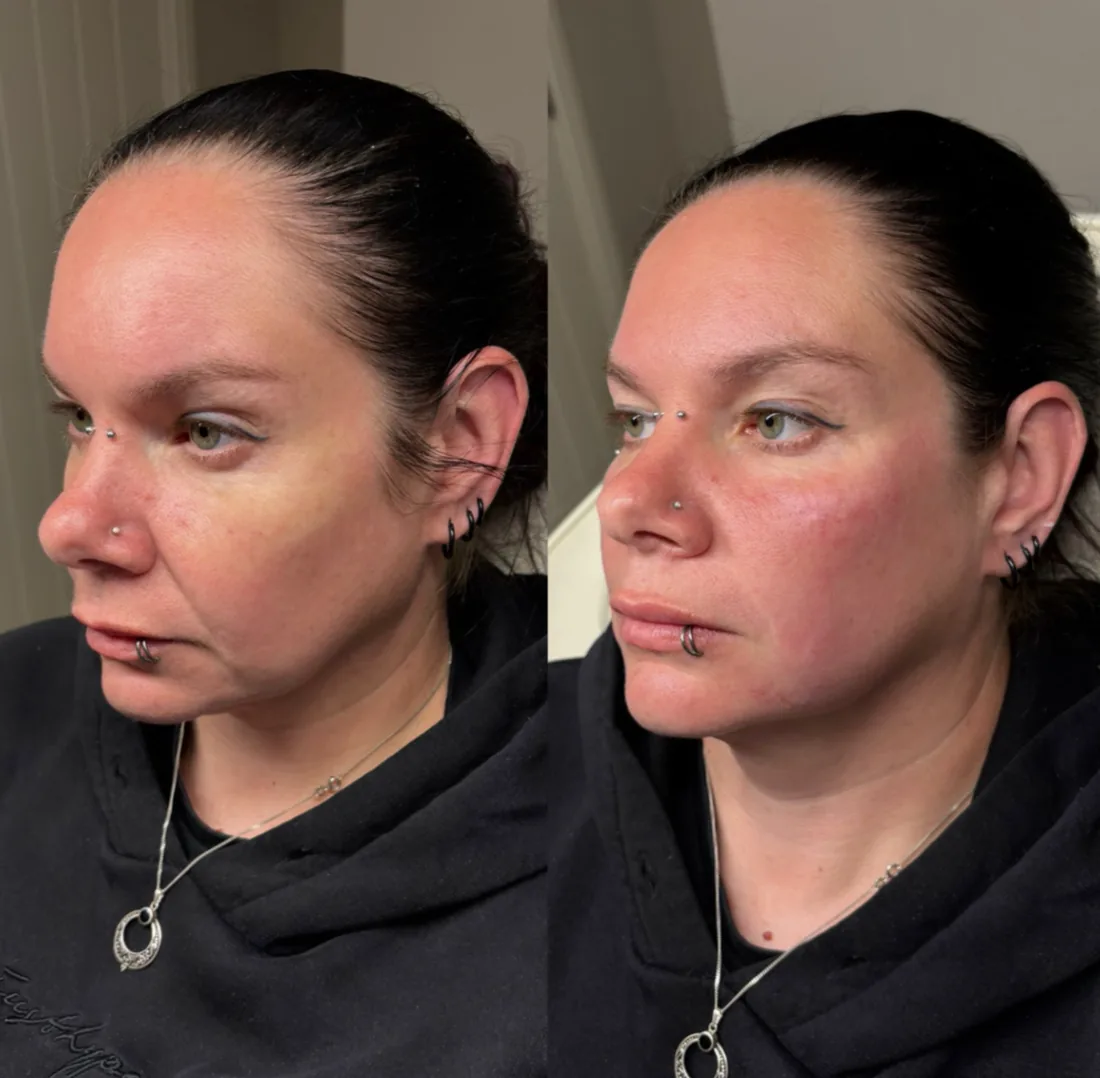
Facial harmonisation treats the face as one structure rather than a list of areas, placing filler where the support has been lost so the features balance — usually staged across appointments rather than done in one sitting.
- How long it lasts
- 12 to 18 months depending on the areas treated
- When you see it
- immediately, settled at 4 weeks
- Downtime
- swelling and possible bruising for several days
- Does it hurt
- mild to moderate depending on the areas
- Sessions
- usually staged over 2 to 3 appointments
Faces do not age one feature at a time. Bone resorbs, fat pads descend and separate, ligaments slacken and skin thins — and the visible result of all of that is often a line or a hollow somewhere quite far from where the change actually happened. Harmonisation means assessing the whole face and treating the cause rather than chasing the symptom.
How the assessment works
I assess facial proportion, the position of the fat compartments, bony support and skin quality, and then we agree a plan together — including what to treat first and, importantly, what does not need treating at all.
Treating in the right order matters. Restoring midface support frequently softens the nasolabial folds and marionette lines that someone came in asking about, using less product than treating those lines directly would have taken.
A closer look
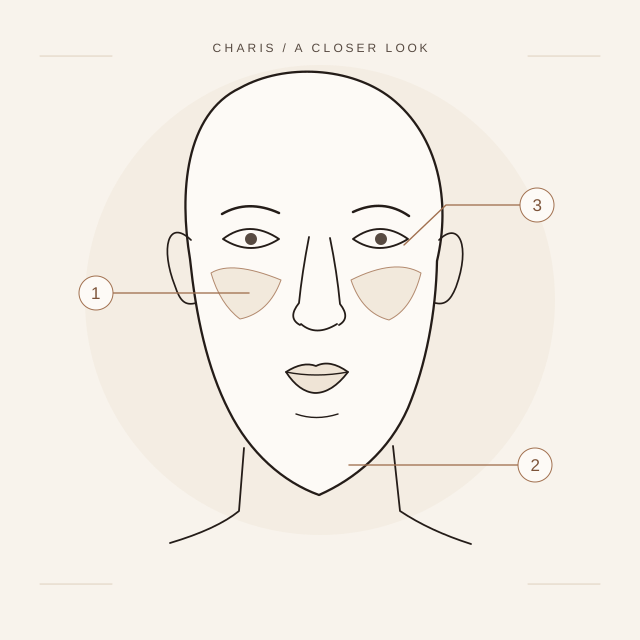
A whole-face assessment
Cheeks
The midface contributes to facial contour and proportion.
Chin and jaw
The lower face is considered from the front and in profile.
Skin
Skin quality is assessed alongside shape and support.
Simplified illustration, not a diagnosis, treatment map or prediction of your result.
Areas
Each area — temples, cheeks, tear troughs, nose, lips, chin, jawline, marionette lines, nasolabial folds and ears — is priced as its own treatment, so a plan is simply the areas your assessment says are worth treating, in the order that makes sense. It may be delivered in one appointment or staged across several.
Every treatment begins with a full-face assessment and an honest conversation. If I do not think a treatment is clinically indicated or right for you, I will say so and explain why — including when the answer is to do nothing.
The result to expect
Support and balance, not change. No oversized cheeks, no overfilled lips, no attempt to remove every sign of ageing. The aim is that you look like yourself, rested.
You will be given written aftercare before you leave, and a direct number to reach me on if anything concerns you afterwards. Reviews are offered at two weeks so we can assess the result together and adjust if needed.
What we use: Restylane®
Restylane is an established range of hyaluronic acid dermal fillers developed by Galderma, with 30 years of clinical experience and ongoing scientific research.
Different areas of the face require different levels of support, flexibility and movement. Restylane offers a range of formulations designed to address these individual requirements and preserve natural expression as much as possible.
Is Restylane animal-derived?
Restylane uses non-animal-derived, stabilised hyaluronic acid produced through bacterial fermentation.
Although this may be relevant to patients with specific ethical or religious considerations, non-animal-derived does not necessarily mean halal-certified. Patients seeking religious assurance should discuss their requirements during consultation.
Safety and suitability
Restylane is a medical device and, like all injectable treatments, carries risks. Common side effects include temporary swelling, bruising, redness and tenderness. Less commonly, serious complications including vascular occlusion, tissue damage and visual impairment can occur.
A thorough consultation, appropriate product selection and an individualised treatment plan are essential. Results and longevity vary depending on the product, treatment area and individual factors.
What the whole thing involves, start to finish
| Stage | What happens | When |
|---|---|---|
| Assessment | A full-face assessment, a discussion of what is actually needed, and the exact figure before anything is booked | Before treatment — same visit or a separate one |
| Treatment | Topical numbing, then placement. The product used contains its own anaesthetic | 30–45 minutes |
| Straight afterwards | Swelling, sometimes bruising, small firm areas at the injection points. You will look treated | 0–48 hours |
| Settling | Swelling drops noticeably and the actual shape starts to show | Day 3–7 |
| Review | Assessed together and adjusted if it needs it. This is where a small top-up happens if one is warranted | 2 weeks |
| The result | What you keep, and what should be judged rather than the day-two version | From 2 weeks |
| Repeat | Reassessed rather than automatically topped up — how much is left is the question, not how long it has been | 9–18 months depending on the area |
The row people skip is the review, and it is the one that separates a good result from a nearly-right one. Two weeks is the first point at which what you are looking at is product rather than swelling, and an adjustment made then is small, cheap and easy.
How the plan is decided
The face is assessed as a whole, not as the area you named
Almost nobody arrives asking about the right area. Somebody unhappy with their nasolabial folds usually needs midface support; somebody who wants a sharper jaw often needs the chin first. Treating the area named rather than the area responsible is the commonest reason a technically good result does not read as an improvement.
That is why the assessment covers the whole face even when you have come about one thing, and why the recommendation is sometimes for a different area than the one you booked to discuss.
How much, and why it is not decided in advance
Volumes are not published here on purpose. A minimum on a price list invites people to shop by quantity, which is the opposite of how the amount should be decided — what is appropriate depends on your anatomy, your starting point and what the face needs, and you are given the exact figure before anything is booked.
Starting conservatively is not caution for its own sake. Adding is straightforward at a review; removing means dissolving, a fortnight looking flatter than you started, and paying twice.
When the answer is no
There are faces where more volume is the wrong answer and saying so costs a booking. Significant skin laxity is the clearest case — adding weight to tissue that has already descended makes it heavier rather than tighter, and the honest conversation is about skin tightening or a surgical opinion.
Sources and further reading
- NHS — Dermal fillers
- British Association of Dermatologists — patient information
- Joint Council for Cosmetic Practitioners
- Aesthetic Complications Expert Group
This page is general information, not personal medical advice. Every treatment needs an individual assessment, and what is right for someone else may not be right for you.
Results
Facial Harmonisation — Ashleigh’s patients
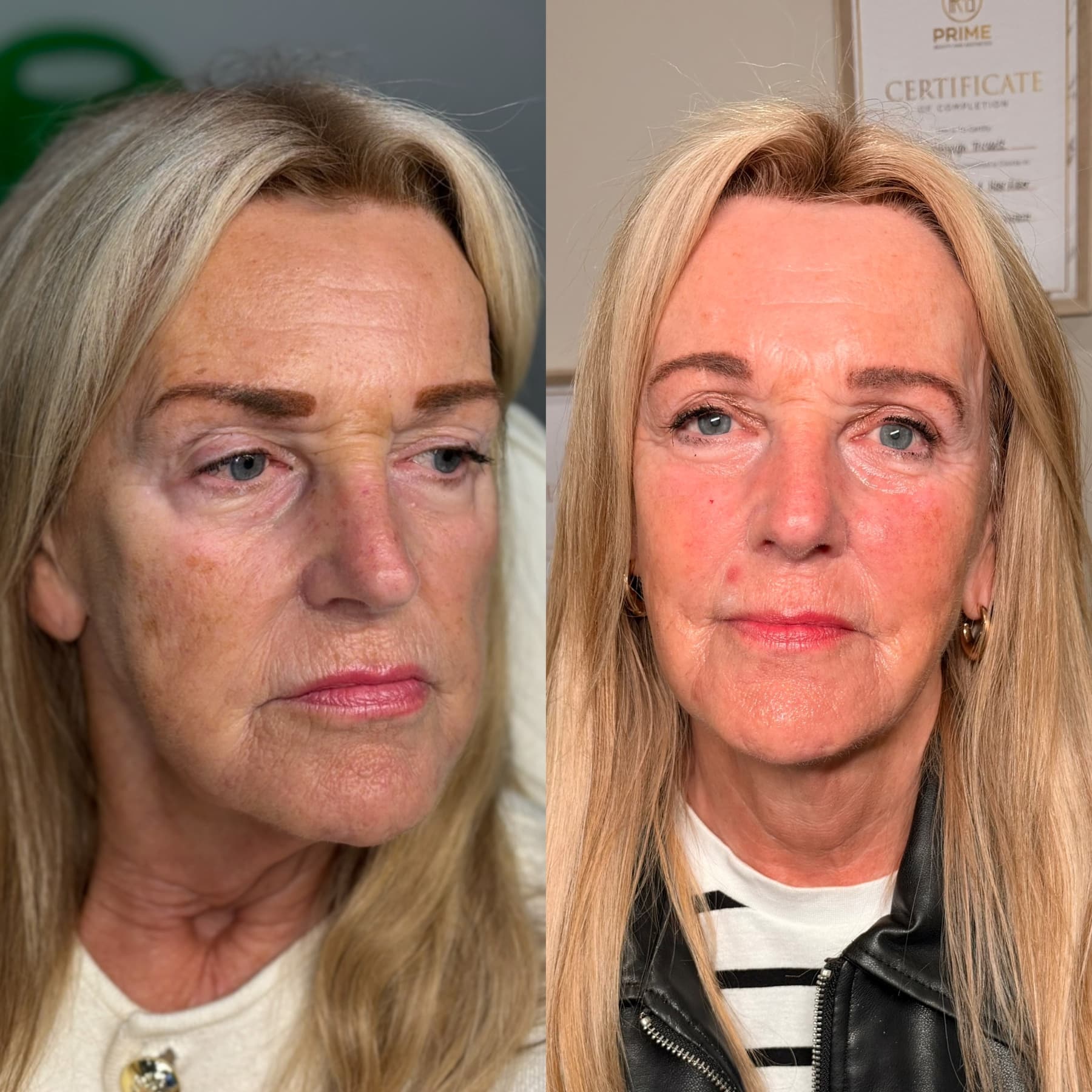
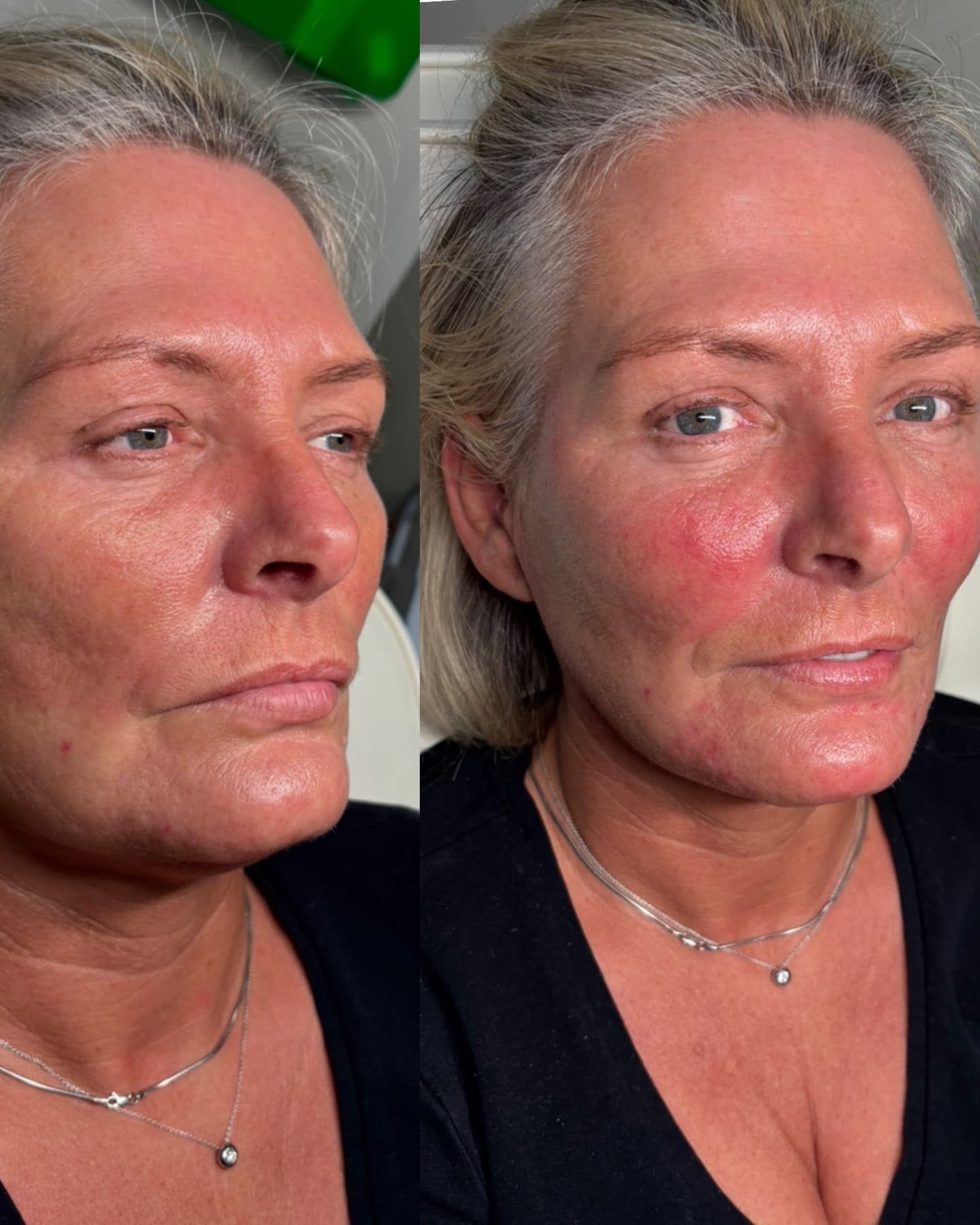
Individual results vary. Shared with patient consent.
Common questions
Facial Harmonisation — what people ask
- Will I look like I've had work done?
- That is exactly what the approach is designed to avoid. Restoring support in the right places reads as looking well, not as having been treated.
- Do I have to have everything at once?
- No. Many plans are staged over several months, which spreads the cost and lets us assess each stage before moving to the next.
- How much product will I need?
- Enough for the area and no more — which is why each area is priced as a treatment rather than by the syringe. Where a plan would need more than I think is appropriate to place safely in one session, we stage it.
- Is facial harmonisation safe?
- It is a medical procedure with real risks, so the honest answer is that it is safe in the right hands and not otherwise. The complication that matters is vascular occlusion — product entering or pressing on a blood vessel — which is uncommon, time-critical, and treatable if recognised quickly. That is why hyaluronidase is held on site here, why the training to recognise it matters more than the product used, and why you should ask any practitioner those two questions before booking.
- Can I have facial harmonisation while pregnant or breastfeeding?
- No. Injectable treatment is not offered during pregnancy or while breastfeeding. That is a precaution rather than a finding of harm — the safety studies do not exist, because nobody runs trials on pregnant women for elective cosmetic treatment, and an unquantified risk is not one worth taking for something that can wait. Come back afterwards and you will be very welcome.
Travelling to Charis
The clinic is in Stacksteads, Bacup, with patients travelling in for facial harmonisation from Rawtenstall, Haslingden, Ramsbottom, Burnley, Rochdale, Bury, Accrington and across the Rossendale valley.
Areas we coverYou may also be looking at
Hyaluronic acid lip enhancement built around your existing anatomy — shape and balance before volume.
Treatment of the under-eye hollow — where correct assessment matters more than any product choice.
A consultation for the treatment of lines and wrinkles — assessment first, with the options and what they can realistically achieve discussed before anything is decided.
Read before you book
Lips
How to get lip filler that looks natural
Natural is a proportion problem, not a volume problem. What actually makes lips read as done, and the specific things to ask for — and to refuse — at consultation.
Regenerative & skin quality
Skin booster or filler — which do you need?
One changes the quality of the skin, the other changes the shape of the face. They are not alternatives, and picking the wrong one is the most common reason a treatment disappoints.
Facial harmonisation
Nasolabial folds
The folds beside the nose are usually a midface problem. Treating them directly is why some faces end up looking heavy.
Facial harmonisation
Marionette lines
The lines from the mouth corners toward the jaw — why they make a resting face look unhappy, and why the answer is structural.
Facial harmonisation
Is there such a thing as a non-surgical facelift?
What the phrase actually means, what it can and cannot do, and when the honest answer is a surgeon.
Facial harmonisation
Treating jowls without surgery
Why jowls form, which stage responds to treatment, and the point at which filler makes them worse.
Get in touch
Book a consultation
Consultations are £30, and that comes off the cost of your treatment if you go ahead. No pressure to book anything on the day — if you are not sure whether you want treatment at all, that is still a good reason to come and talk.